User Panel
Training / Courses
Search

Katarzyna
Operations Director
Do you work in a warehouse or logistics centre in the Netherlands and need to operate an EPT or stacker? You may hear both that you need a certificate and that no formal licence is required. The confusion comes from the difference between the requirement to hold a specific certificate and the requirement to have the appropriate skills to operate the equipment safely. Dutch regulations clearly define the requirements regarding employee competence, although they do not introduce a single state-issued “licence” for operating an EPT or stacker.
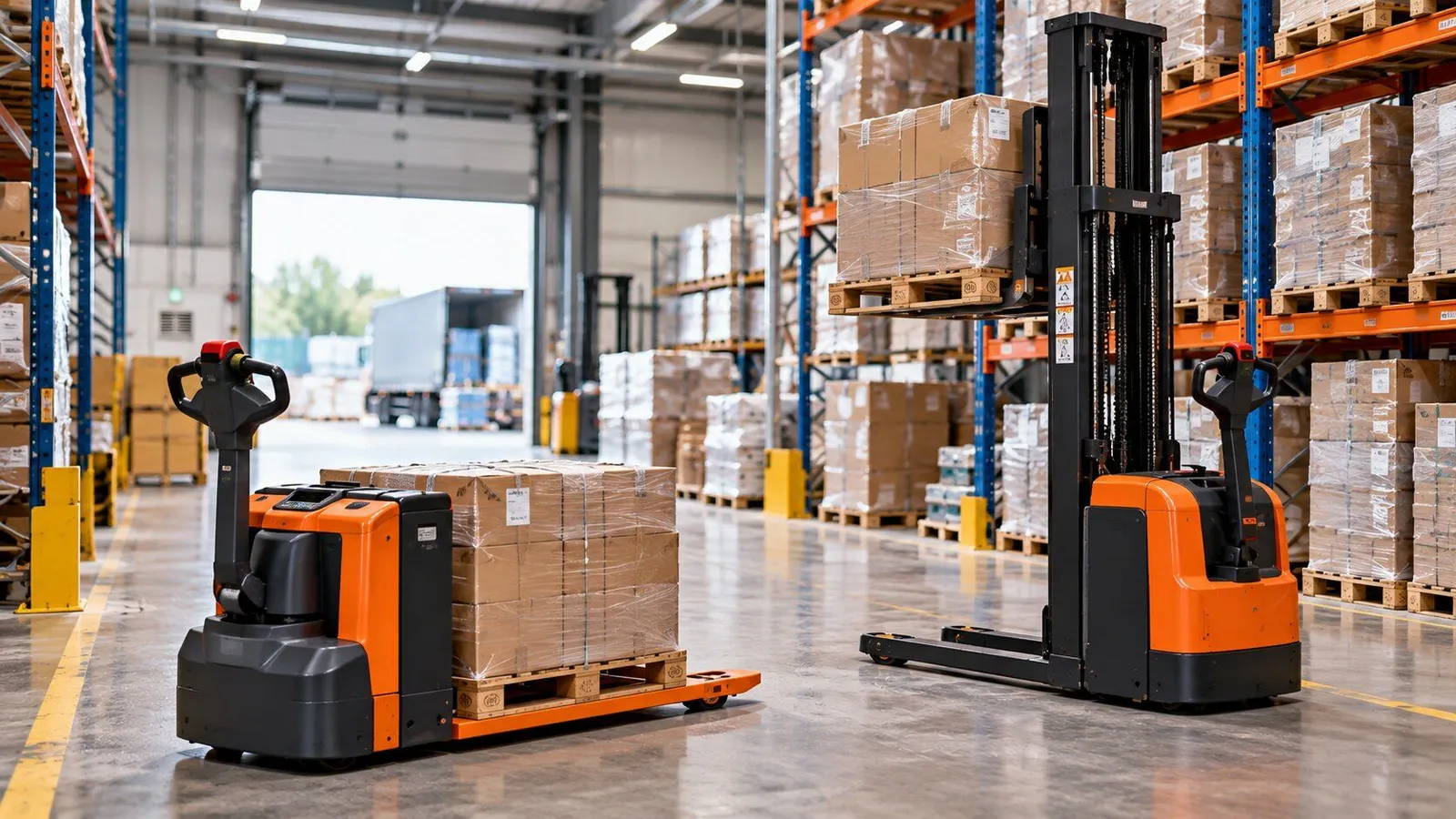
EPT is an abbreviation of the Dutch term elektrische pallettruck, meaning an electric pallet truck. The equipment is primarily used to move pallets over short and medium distances. You will find EPTs in warehouses, distribution centres, production facilities, wholesalers, and loading and unloading areas.
An EPT should not be confused with a standard manual pallet truck. The electric drive means that the operator does not have to pull a heavy load manually, but at the same time must control a powered machine and the load being transported. Depending on the design, the operator may walk alongside the EPT or use a version equipped with an operator platform or ride-on position.
A stapelaar, or stacker truck, serves a different purpose. In addition to moving a pallet, it can lift it and place it at a specified height. Thanks to its mast, the machine can be used, among other things, for placing goods on racking.
The ability to lift loads introduces additional hazards when operating a stacker, including machine and load stability, rated capacity, lift height, and correct positioning of the pallet on the forks.
Dutch regulations do not establish a specific state-issued EPT certificate that every person operating an electric pallet truck must hold. However, this does not mean that an employer can simply give you the equipment without any preparation and allow you to start operating it.
A key provision in this context is Article 7.17c(1) of the Dutch Arbobesluit, the Working Conditions Decree. It states that self-propelled mobile work equipment may only be operated by employees who possess “specifieke deskundigheid”, meaning the specific expertise, knowledge, and skills required to operate the equipment safely.
An electrically powered EPT falls within the scope of these requirements.
Another important provision is Article 8 of the Arbowet, the Dutch Working Conditions Act. It requires employers to provide employees with effective information about their work, the associated hazards, and the measures used to control those risks. Employees must also receive instructions appropriate to their tasks. In addition, the employer must supervise compliance with safety instructions and procedures.
The answer to the question “Do I need an EPT certificate?” is therefore: Dutch law does not specify a particular EPT certificate as a mandatory document, but the operator must have the competence required to use the equipment safely, while the employer is responsible for providing appropriate training, instruction, and supervision.
The same general principle applies to a stacker. Dutch legislation does not explicitly impose a single state-mandated “stapelaar certificaat” that every stacker operator must hold.
However, this does not mean that anyone can operate a stacker without proper preparation.
The Arbobesluit requires operators of self-propelled mobile work equipment to have the appropriate competence. In addition, Article 7.18(3) of the Arbobesluit provides that lifting equipment must be operated by persons who possess the necessary expertise.
This is particularly important when operating a stacker because the operator does more than simply move a pallet across the warehouse floor. They must also lift and place loads safely.
An operator should therefore understand, among other things:
Stacker training should therefore involve much more than simply showing an employee the control buttons. The operator must be able to use the equipment safely under actual workplace conditions.
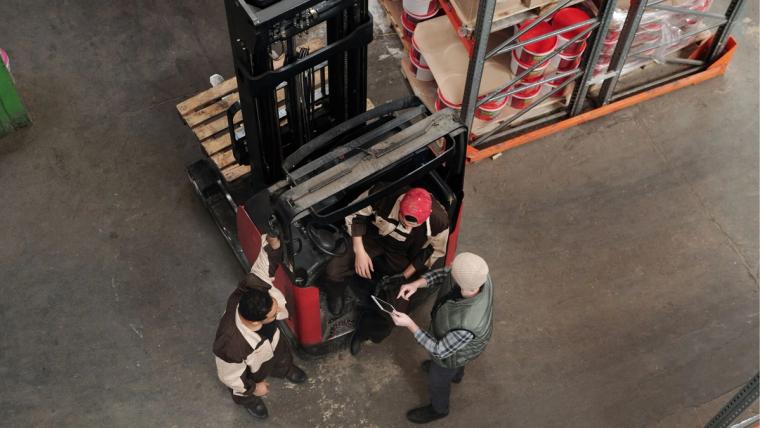
This distinction is particularly important for workers in the Netherlands. In conversations about warehouse jobs, people often use the simplified phrase: “You need a certificate.” From a legal perspective, however, the more important issue is whether the employee has the required competence and whether the employer has properly organised the necessary training and instruction.
Dutch regulations do not prescribe one mandatory type of document for all EPT and stacker operators. However, the employer must be able to responsibly authorise a particular employee to operate the equipment.
A company may therefore organise appropriate in-house training and document that it has taken place. Alternatively, it may send employees on an external training course that includes an assessment of their knowledge and practical skills and results in the issue of a certificate.
In this context, a certificate has an important practical advantage: it provides clear evidence that an employee has completed specific training. However, it should not be treated as a document that automatically releases the employer from their other obligations under the Arbowet.
Even someone who has completed a training course should receive information and instruction relating to the specific workplace, the particular model of equipment being used, warehouse traffic rules, and hazards present within the company.
“I’ve used one of these before” does not necessarily mean that an employee understands all the principles of safe operation. This is particularly relevant for people who learned to use an EPT or stacker from a colleague but have never completed structured instruction or training.
An operator needs to know more than how to start the equipment, turn, and lift a pallet. They must understand the hazards associated with operating the machine. In a warehouse, dangerous situations can occur when:
The Arbobesluit also specifically addresses the organisation of traffic involving mobile work equipment. Article 7.17c includes requirements for effective traffic rules where mobile equipment operates in areas where employees may be present. The regulations also require organisational measures to reduce the risk of employees being struck or otherwise injured by moving equipment.
EPTs are among the most common types of material handling equipment used in logistics. You will find them in large distribution centres serving retailers, e-commerce operations, and retail chains, as well as in smaller warehouses, wholesalers, and manufacturing facilities.
They are commonly used by order pickers, warehouse operatives, inbound and outbound employees, and workers responsible for loading and unloading.
Typical EPT tasks include transporting pallets between warehouse zones, supplying goods to order-picking stations, moving completed orders, and handling goods in dispatch areas.
A stacker is useful when a pallet needs to be lifted as well as transported. It can be used in warehouses, smaller logistics centres, wholesalers, and production facilities. It is particularly practical in workplaces where a more compact machine than a conventional forklift is required.
A forklift (heftruck), reach truck, EPT, and stacker differ in their design, controls, and the types of tasks they are used to perform. When authorising an employee to operate a specific type of equipment, their actual knowledge and practical skills relating to that equipment are therefore what matters.
If you already have experience operating a heftruck, it may be easier for you to understand some of the principles of load handling. However, this does not mean that an employer should allow you to operate a stacker or another type of equipment you have never used before without any instruction.
The same applies in the opposite direction. Being able to operate an EPT does not automatically mean that you are prepared to operate a heftruck or reach truck. Before starting work, make sure you know exactly which equipment your training covers and which machines you will be expected to operate in your role.
In Dutch logistics, many people work through an uitzendbureau, or temporary employment agency. However, the type of employment arrangement does not mean that machine safety requirements can be ignored.
If you start work through an employment agency and your job requires you to operate an EPT or stacker, you should know before using the equipment whether you have been properly trained, instructed, and authorised to do so.
Do not start operating a machine independently simply because “everyone uses it” or because a colleague spent a few minutes showing you the basic controls. If you do not understand the instructions, are unfamiliar with the equipment, or do not know the traffic rules that apply in the warehouse, report this before starting work.
This also applies to language barriers. Instructions and training must be effective. An employee must understand the information provided about their tasks and the associated hazards rather than simply signing a document confirming attendance.
Yes. The fact that Dutch law does not establish a single mandatory EPT or stacker certificate does not mean that a company cannot require such a document before authorising an employee to operate the equipment.
The employer is responsible for workplace safety and may determine how operator competence is assessed and documented. A company may therefore decide that only employees who have completed appropriate training are permitted to operate certain types of equipment.
If your employees use EPTs, stackers, or other types of warehouse trucks, make sure their preparation involves more than a brief demonstration of the machine at the beginning of a shift.
Bonapi provides forklift and warehouse truck training for employees in the Netherlands. We can train individual operators as well as larger groups of employees, helping companies prepare their teams to work safely with material handling equipment.
Check out our forklift training courses for employees and choose the training that matches the equipment used in your company. Additional qualifications can increase an employee’s opportunities on the job market, while for employers, a properly trained team means safer and better-organised operations.
Follow Bonapi on social media or subscribe to the newsletter to receive information about upcoming training courses and practical resources on safe working practices in the Netherlands.