User Panel

Training / Courses
Search

Nicole
Director of Finance and Administration
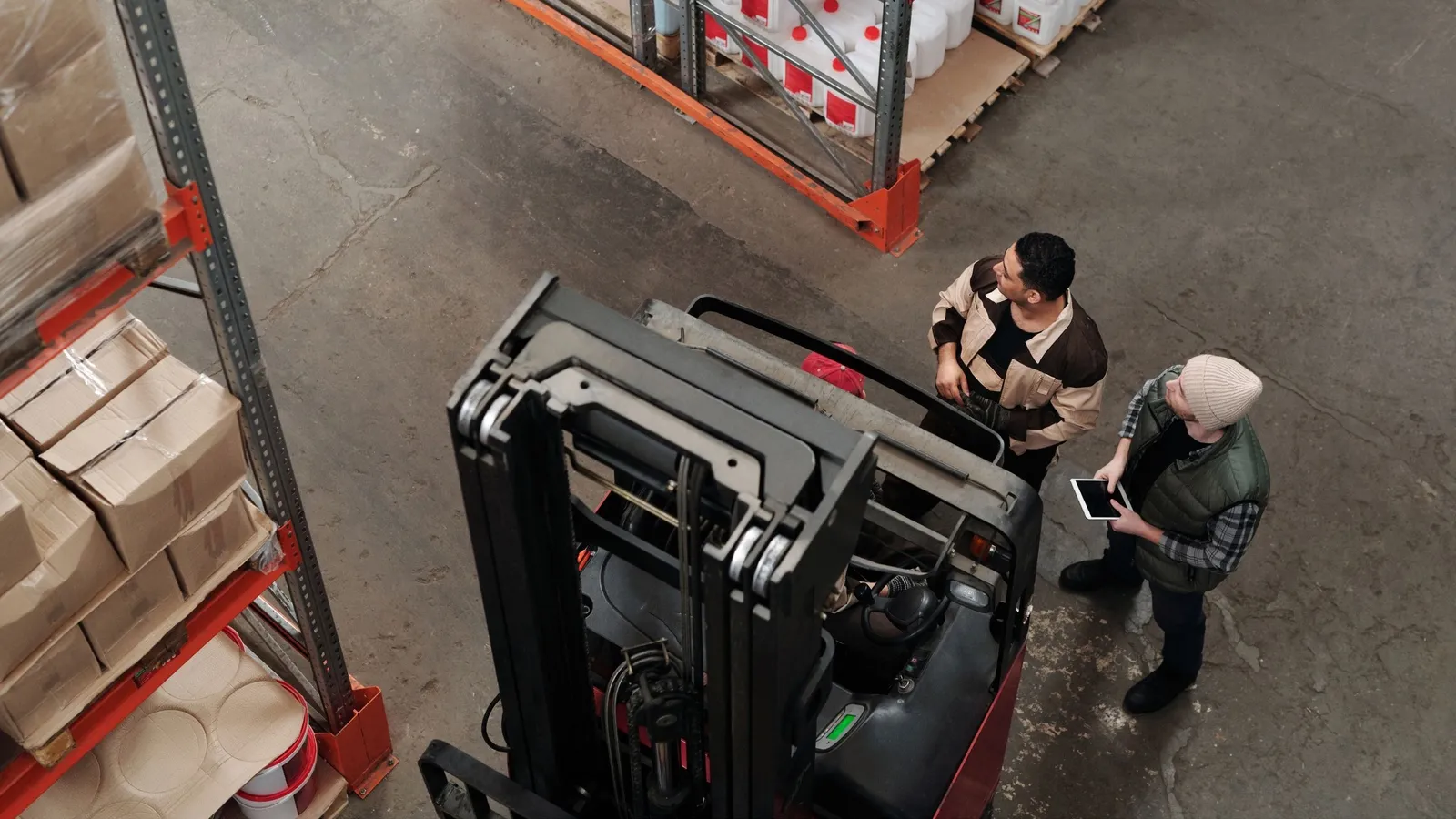
Working as a forklift operator in the Netherlands can be a good move if you’re looking for stable employment in logistics, manufacturing, warehousing or the technical sector. However, before you start sending out your CV, there’s one thing you need to understand clearly: in the Netherlands, it’s not just experience that counts, but also safety and the ability to prove your qualifications. In practice, employers will very often ask you about your forklift certificate, VCA certification or previous experience in internal transport. Below, we explain what the regulations actually stipulate, what companies expect and how to prepare for the job without taking any unnecessary risks.
This is one of the most common questions asked by people who want to work as forklift operators in the Netherlands. The answer requires some clarification: Dutch regulations do not specify a single, specific ‘forklift licence’ that would always and in every situation be legally designated as a mandatory document. However, this does not mean that you can simply get on a forklift and start working without any training.
The basis for this is Dutch health and safety legislation, namely the Arbowet and the Arbobesluit. The official Arboportaal website, run by the Ministry of Social Affairs and Employment, states that mobile work equipment, such as forklift trucks, usually requires the operator to possess ‘specific expertise’. This stems from Article 7.17c of the Arbobesluit concerning the use of mobile work equipment.
In practice, this means that the employer must be able to demonstrate that the operator possesses the knowledge and skills required to operate the forklift safely. A forklift or reach truck certificate is the simplest and most straightforward way of confirming such competence. Therefore, even though the regulations do not use the simple phrase ‘every operator must hold certificate X’, the labour market operates in such a way that it is often difficult to find employment without such a certificate.
In the Netherlands, a forklift truck is classified as a self-propelled mobile work machine. This is important because the regulations for such equipment are more stringent than those for simple warehouse tools. Article 7.17c of the Arbobesluit states that self-propelled mobile work machines may only be operated by employees who possess the appropriate, specific knowledge and skills.
A second important provision is Article 8 of the Working Conditions Act (Arbowet), which concerns information and training. The employer is obliged to effectively inform the employee about the work to be carried out, the associated risks and the measures designed to minimise those risks. The employer must also provide training tailored to the employee’s tasks and working conditions.
For you as a candidate, this means two things. Firstly, the employer should not allow anyone who lacks the appropriate training to operate a forklift. Secondly, simply saying ‘I used to drive one in a warehouse’ may not be enough if you cannot provide evidence of this or if the employer is unable to assess your skills.
Job adverts in the Netherlands often mention various types of machinery. It’s worth knowing what they are, as not every job ‘on a forklift’ means the same thing.
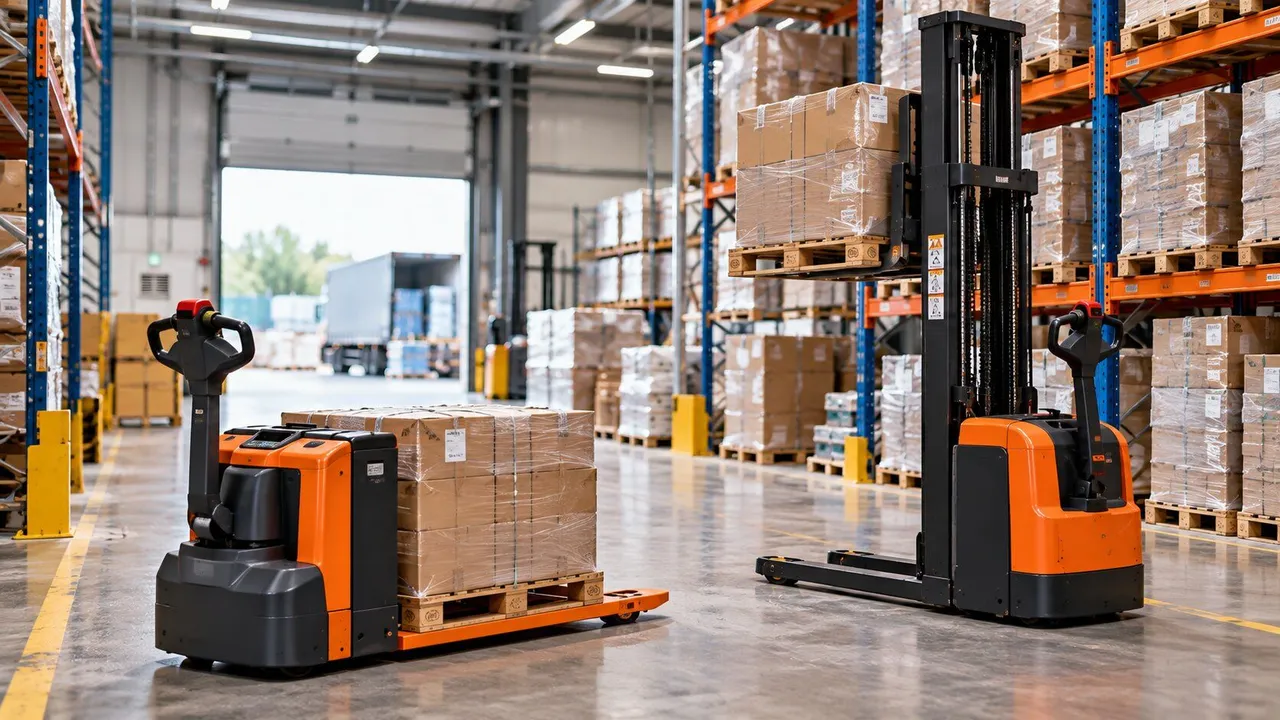
You’ll most often come across:
Do not assume that a single certificate always covers every type of equipment. The scope of the training should correspond to the equipment you will be using. If a job vacancy requires you to operate a reach truck, but you only have experience operating a forklift truck, the employer may require additional training or separate proof of competence.
Forklift operators are mainly associated with warehouses, but in the Netherlands the demand for them is much broader. Forklifts are used wherever pallets, components, building materials, packaging, machine parts or finished products need to be moved efficiently.
You’ll find the most vacancies in sectors such as:
Each of these sectors has its own specific characteristics. In a distribution centre, speed, accuracy and the ability to use a scanner will be key. In manufacturing, coordination with the production line may be more important. On a construction site, there are additional factors such as changing conditions, the movement of other machinery and a greater responsibility for the surrounding environment.
The job of a forklift operator involves more than just driving a pallet from point A to point B. In good companies, the day begins with a check of the equipment: brakes, forks, tyres, horn, lights, battery level and the technical condition of the machine. The operator should report any faults before starting work.
During your shift, you carry out tasks in accordance with the warehouse or production plan. This may involve unloading lorries, placing pallets on racks, delivering materials to the production line, picking orders or preparing shipments. You will often work with a scanner, a warehouse management system and transport documents.
The greatest risks relate to collisions with pedestrians, loads tipping over, the forklift losing stability, working in narrow aisles and lifting pallets incorrectly. That is why employers pay attention not only to speed but also to driving style. A good operator drives smoothly, anticipates situations and does not treat safety rules as an obstacle.
It depends on the employer, the type of work and the document you hold. Polish qualifications may help to demonstrate your experience, but a Dutch company may require a local certificate, in-house training or confirmation of your competence in line with its procedures.
It is not worth assuming that your qualification will be automatically recognised. If you have a Polish certificate, take it with you – ideally in a format that you can show to the employer or recruitment agency. Be prepared, however, for the company to refer you to a forklift truck or reach truck course, or on-the-job training in the Netherlands.
For many candidates, the best solution is to combine their experience with the up-to-date training required by a specific company. The employer can then see that you are familiar with the equipment, but are also ready to work in accordance with Dutch safety regulations.
If you want to find a job quickly in the Netherlands as a forklift operator, prepare a set of documents and details that will make the recruitment process easier. It’s not about gathering paperwork ‘just for the sake of it’, but about showing that you can be safely integrated into the role.
The following will be most useful:
In your CV, avoid generalities such as ‘warehouse work’. It is better to write: ‘operating a reach truck in a high-bay warehouse’, ‘loading and unloading lorries’, ‘working with a barcode scanner’, ‘transporting pallets between the production area and the warehouse’. This sort of information is much more useful to a recruiter.
If you’re starting from scratch, you don’t have to do everything at once. The most important thing is to organise your steps and tailor them to the type of job you’re looking for.
Step 1: Check what sort of equipment you want to work with. If you’re interested in a traditional warehouse, start with a forklift or EPT. If you’re aiming for distribution centres and high-bay warehouses, a reach truck will come in handy. If you want to work in order picking, look for roles involving an order picker.
Step 2: Tailor your CV to the specific role. Include the names of the equipment, sectors, job responsibilities, shift patterns and type of warehouse. If you have no experience, emphasise your willingness to undergo training, your knowledge of health and safety regulations and your availability.
Step 3: Check the requirements in the job adverts. Look out for the following terms: ‘heftruckcertificaat’, ‘reachtruckcertificaat’, ‘VCA’, ‘ervaring’, ‘ploegendienst’, ‘logistiek medewerker’ and ‘warehouse operator’. If ‘VCA’ is mentioned frequently, it’s worth obtaining the certification before you leave.
Step 4: Boost your qualifications. When working in a technical or industrial environment, VCA certification may be a greater asset than yet another general warehouse course. For strictly warehouse-based work, a certificate for a specific type of forklift will be crucial.
Step 5: Prepare for the interview. The recruiter may ask about safety, load stability, driving with the forks raised, giving way to pedestrians, equipment checks and working in narrow aisles. Give specific answers, even if the interview is brief.
The first mistake is the belief that ‘warehouse’ experience is automatically sufficient. For a Dutch employer, what matters is whether you can operate specific equipment safely and whether you can demonstrate this with supporting documentation.
The second mistake is including information that is too general in your CV. If you’ve worked on a forklift, specify which type. If you’ve operated a scanner, mention it. If you’ve worked shifts or in a cold store, include that too. Such details show that you understand the realities of the job.
The third mistake is underestimating the importance of VCA. Not every forklift operator will need it, but in many job vacancies, VCA acts as a filter. Without it, you may not be allowed onto the premises, even if you have forklift experience.
The fourth mistake is a lack of language skills. You don’t need to speak Dutch perfectly, but you must be able to understand commands, signs, safety messages and basic instructions. When operating machinery, there’s no room for guesswork.
If you run a business, an employment agency or are putting together a team to work in the Netherlands, providing your staff with training in Poland beforehand can save you a lot of trouble. A well-prepared group goes through the induction process more quickly, understands safety rules better and finds it easier to meet the requirements of clients in the Netherlands.
VCA training in Poland is particularly practical when you are sending staff to work in industry, engineering, construction, contract logistics or on site with clients who require proof of knowledge of health and safety regulations. Instead of organising everything only after arrival, you can prepare your staff in advance, in a language the group understands.
For the employee, this means less stress. For the company, it means better organisation. For the client in the Netherlands, it sends a signal that the team is not arriving at random, but is prepared to work in accordance with procedures.
The best strategy is simple: combine practical experience with documentation that an employer will understand. If you have forklift experience, make sure to highlight it in your CV. If you don’t have the relevant documentation, check whether you need a forklift, reach truck or EPT certificate. If you’re aiming for a technical, industrial or construction role, consider the VCA.
Remember that the Dutch job market is very practical. Employers want to know whether you can start work safely, whether you understand the risks, and whether you’ll need to be trained from scratch. The better you prepare before the recruitment process, the greater the chance that your CV won’t get lost amongst the other applications.
It’s also worth keeping an eye on the requirements in specific job adverts. If you notice that most of the adverts you’re interested in require VCA, don’t treat it as a mere formality. It could be the difference between receiving a job offer and getting no response at all.
If you want to improve your chances of finding work in the Netherlands or prepare a team for a posting there, make sure they have the right qualifications before you even start recruiting. A forklift operator course helps participants understand the principles of safe working practices and is often required by Dutch employers, clients and technical firms.
Bonapi runs forklift training courses in Poland for individuals, employees and entire groups. We can train your team before they leave, help them prepare for the exam and explain which course option is best suited to a particular role.