User Panel

Training / Courses
Search

Nicole
Director of Finance and Administration
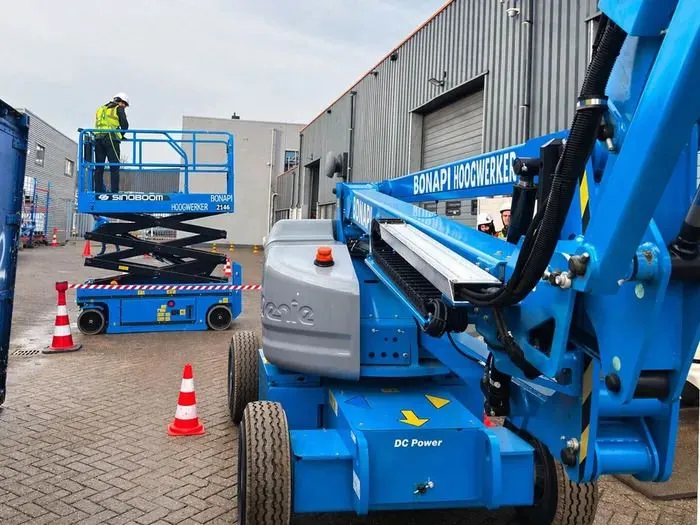
Mobile elevating work platforms (MEWPs), also known as aerial work platforms or cherry pickers, are widely used in construction, manufacturing, logistics and installation work. Operating these machines requires proper training and, in Poland, qualifications that comply with the requirements of the Office of Technical Inspection (UDT). People planning to obtain certification often wonder how the different categories of work platforms differ, which machines they will be qualified to operate after training, and whether they should choose a UDT course or internationally recognised IPAF training.
A mobile elevating work platform is a machine designed to lift workers, along with the tools and materials they need, to a specified height. Unlike traditional scaffolding, it provides relatively quick access to elevated work areas and, in many cases, allows workers to reposition the platform without dismantling any structures.
MEWPs are primarily used wherever work needs to be carried out above ground level and a stable working platform is required. Depending on the machine’s design, the operator can raise the platform vertically, extend it horizontally or reach areas located above obstacles.
Mobile elevating work platforms are most commonly used in the following industries:
Operating these machines is a professional skill in its own right, but it is also a valuable additional qualification for electricians, fitters, installation technicians, maintenance workers and construction specialists.
Choosing the right training course should primarily depend on the type of equipment you intend to operate. Different work platforms vary in their design, mobility, working reach and intended applications.
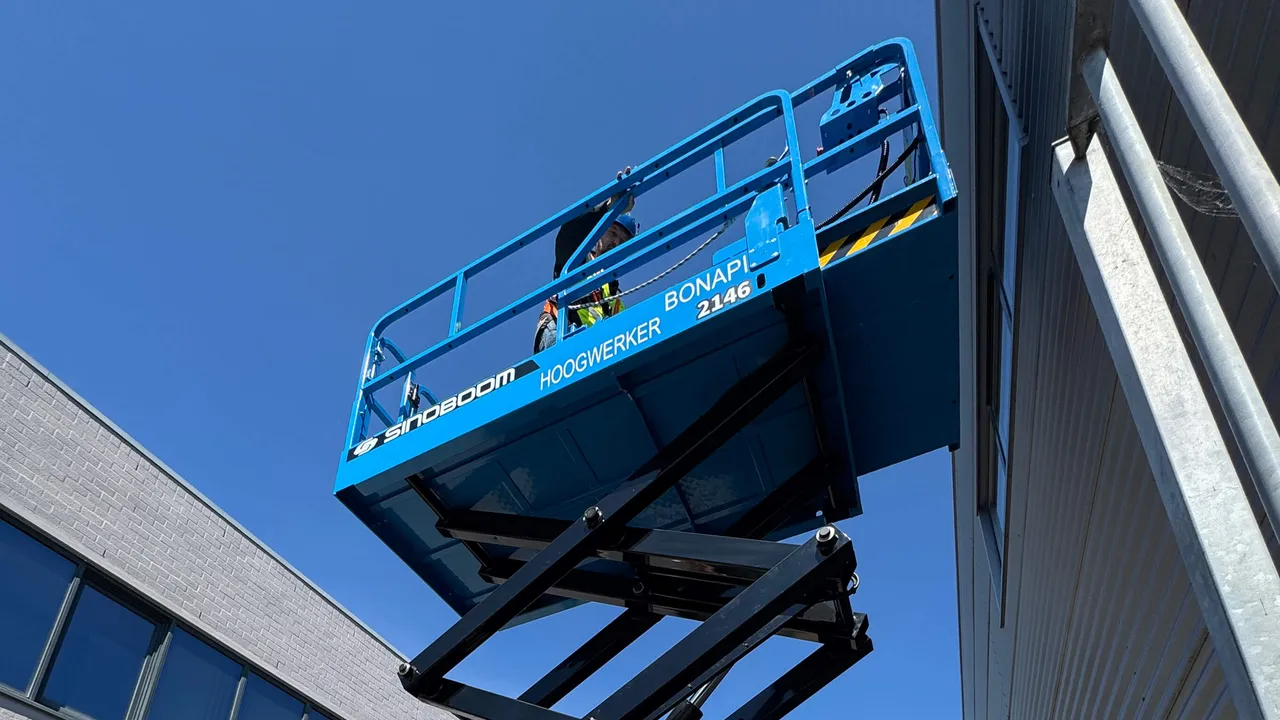
Scissor lifts feature a platform raised by a mechanism resembling a pair of extending scissors. Their primary function is to lift workers vertically, although some models also have extendable decks that increase the available working area.
They are particularly suitable for installing ceiling-mounted systems, carrying out finishing work and maintaining industrial buildings. Scissor lifts may be powered by electric motors or internal combustion engines. The choice of model depends on the working environment and ground conditions.
Articulating boom lifts have a boom consisting of several interconnected, movable sections. This design allows operators to reach areas that are difficult to access with a scissor lift, such as spaces above installations, machinery or structural elements.
They are commonly used for industrial installation work, building maintenance and construction projects that require manoeuvring around obstacles.
Telescopic boom lifts use an extendable boom to achieve a considerable working reach. They are used on construction sites, around steel structures and during façade installation and maintenance work.
Operators must pay particular attention to the machine’s rated load capacity, working reach, ground conditions and the operating limitations specified by the manufacturer.
Mobile elevating work platforms also include mast lifts, trailer-mounted platforms and vehicle-mounted aerial platforms. These machines serve different purposes and may be subject to different qualification requirements.
For this reason, the general term “cherry picker licence” is not enough to determine which machines a person is legally qualified to operate.
In Poland, mobile elevating work platforms are classified as lifting and handling equipment subject to technical supervision. The rules governing operator qualifications are established, among other regulations, by the Polish Act on Technical Inspection and the Regulation of the Minister of Entrepreneurship and Technology of 21 May 2019 concerning the procedures for verifying qualifications required to operate and maintain technical equipment.
Under the current UDT qualification system, an important distinction is made between mobile elevating work platforms and other types of elevating platforms.
This category is particularly relevant to people interested in operating scissor lifts, articulating boom lifts and telescopic boom lifts classified as mobile elevating work platforms.
It covers machines designed to be moved in accordance with their intended purpose. In practice, these are the machines commonly used on construction sites, in industrial facilities and during installation work.
A UDT qualification certificate for operating mobile elevating work platforms is valid for 5 years.
Stationary, suspended and mast-climbing work platforms form a separate category. These structures are used for façade work, building renovations and maintenance of industrial installations, among other applications.
UDT qualification certificates in this category are valid for 10 years.
You should not assume that certification for mobile elevating work platforms automatically covers every other type of platform. Before choosing a course, check the type of machine and the qualifications required to operate it.
Anyone applying for a UDT qualification certificate must be at least 18 years old and successfully pass an examination conducted by a committee appointed by the relevant technical inspection authority.
A preparatory course is a practical way to acquire the knowledge and skills needed for the examination. However, completing the training itself does not automatically grant UDT certification.
Training typically covers the following topics:
The UDT examination assesses both theoretical knowledge and practical operating skills. Candidates who pass receive a qualification certificate specifying the scope of equipment they are authorised to operate.
It is also important to distinguish between operator and maintenance qualifications. Being certified to operate a machine does not automatically authorise someone to perform maintenance activities that require separate qualifications.
IPAF (International Powered Access Federation) is an international organisation dedicated to promoting the safe use of powered access equipment. Its training system is used in many countries, including the Netherlands, Belgium and the United Kingdom.
After successfully completing the appropriate training, operators can obtain a PAL Card (Powered Access Licence), which confirms their qualifications for specific equipment categories. The standard validity period of a PAL Card is 5 years.
The main IPAF categories are:
For people working on construction sites, in industrial facilities and on technical installations, IPAF categories 3A and 3B are particularly useful.
IPAF 3A training prepares operators to use mobile vertical platforms. It is a suitable choice for electricians, installation technicians, warehouse workers and people responsible for maintaining technical infrastructure.
During the course, operators learn how to position the machine correctly, assess ground conditions, monitor platform loads and perform manoeuvres safely.
Category IPAF 3B covers self-propelled boom-type platforms. When operating these machines, operators must consider additional hazards associated with horizontal outreach, boom movement and potential collisions with obstacles.
This training is particularly useful for steel structure installers, construction workers, industrial installation technicians and professionals responsible for maintaining large facilities.
If you intend to operate both scissor lifts and boom lifts, a combined course covering both categories is a practical option.
This type of training increases your professional flexibility. It allows you to carry out tasks using different types of equipment, provided the work falls within the scope of your qualifications and you have received the necessary familiarisation with the specific machine model.
Although both systems relate to elevating work platforms, they serve different purposes.
UDT is a qualification system established under Polish law, while IPAF is an international training standard. An IPAF certificate does not automatically replace the UDT qualification certificate required to operate certain types of equipment in Poland.
Your choice of training should therefore depend on where and how you intend to work.
If you plan to operate mobile elevating work platforms in Poland, a course preparing you for the UDT examination will generally be the appropriate starting point. If you intend to work in the Netherlands, Belgium or another country where employers require IPAF certification, check which international training category is relevant to your role.
You can also obtain both qualifications. This is particularly useful for workers carrying out projects in different countries and for companies sending their teams abroad.
Operating an elevating work platform involves much more than simply raising and lowering the platform. The operator is responsible for preparing the machine, checking its condition and performing all manoeuvres safely.
Before starting work, the operator checks the machine’s technical condition, controls, safety systems, surroundings and ground conditions. They must also know the platform’s maximum permitted load and any operating restrictions related to wind speed.
Hazards in the immediate vicinity of the platform are particularly important. These include overhead power lines, structural elements of buildings, moving vehicles and pedestrians, as well as the risk of the operator becoming trapped or crushed between the platform and an obstacle.
When operating boom lifts, it is especially important to use appropriate fall protection in accordance with the risk assessment, the manufacturer’s instructions and the safety requirements applicable to the workplace.
Operators must also know what to do in the event of a malfunction and how the emergency lowering system works. For this reason, experience gained simply by watching other people operate equipment is no substitute for proper training.
Before enrolling in a training course, establish three essential things: which machines you will operate, where you intend to work and what qualifications your employer requires.
For someone starting work in Poland, a UDT course for mobile elevating work platforms may be the right choice. For workers preparing for international construction projects, an IPAF 3A + 3B course may be a better option.
The training programme is equally important. A good course should include practical exercises on suitable equipment, pre-use inspections, safe manoeuvring and emergency procedures.
If you are an employer, choose training that matches the machines used in your company. This will help you avoid situations where an employee completes a course but their qualifications do not cover the equipment they are expected to operate.
If you want to obtain qualifications to operate aerial work platforms or prepare your employees for working at height, explore the training courses offered by the Bonapi Training Centre in Gliwice.
Bonapi provides vocational training for individuals and businesses, including courses covering mobile elevating work platform operation and internationally recognised IPAF 3A and 3B training.
The IPAF 3A + 3B course is available in a hybrid format. The theoretical component is completed online, while practical training and the examination take place in person at the training centre at 16 Św. Urbana Street, Gliwice, Poland.
Explore the IPAF 3A and 3B Mobile Elevating Work Platform Course at Bonapi Gliwice or visit Bonapi Poland to learn more about the available UDT aerial work platform training courses.
We also organise training for companies, groups of employees and teams preparing to carry out projects in Poland and abroad. Contact Bonapi to select a course that matches the equipment used in your company and discuss the available training options for your employees.
Follow Bonapi on social media to stay informed about upcoming training courses, professional qualifications and career development opportunities in the technical industry.