User Panel
Forklifts
Search

Szymon
IT Specialist / Process Automation Specialist
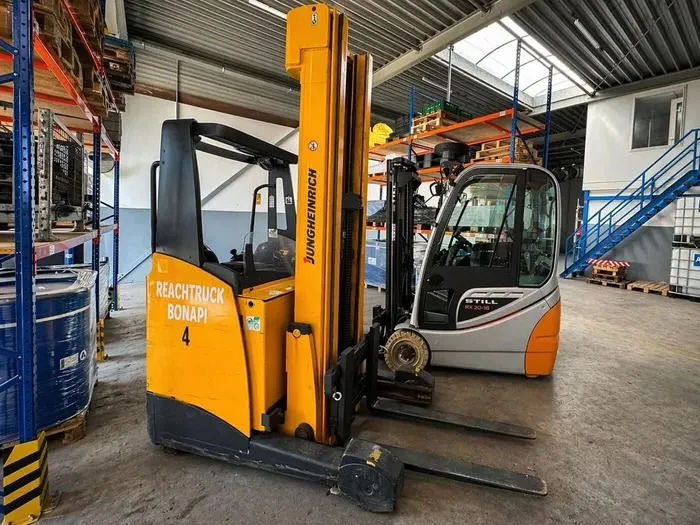
Heftruck and reachtruck are two types of forklift trucks commonly found in Dutch warehouses, distribution centres and manufacturing facilities. Although both are used to move and lift loads, they differ in their design, handling and intended applications.
Let’s start with the terminology, as these are the Dutch terms you will most often come across in job vacancies in the Netherlands.
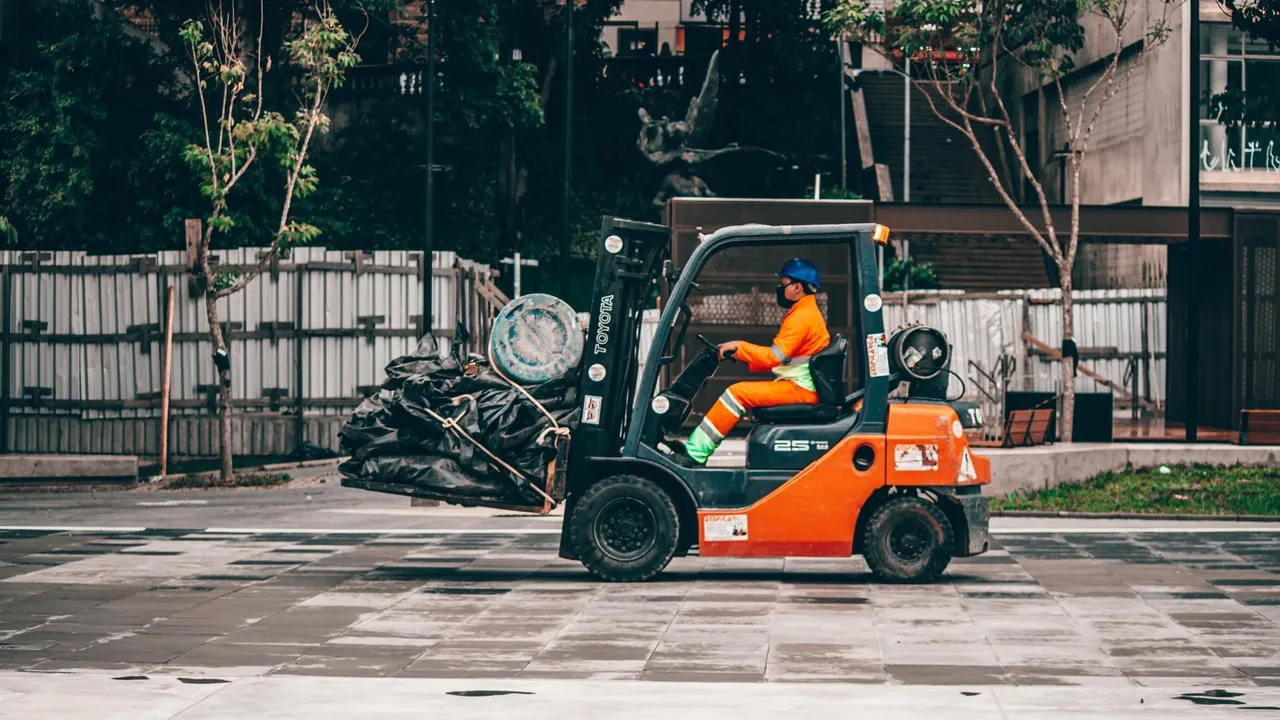
A heftruck is a conventional counterbalance forklift truck. The operator generally sits facing the direction of travel, with the forks positioned at the front of the vehicle. The truck can pick up pallets from the floor, a lorry or racking, transport them and place them in the designated location.
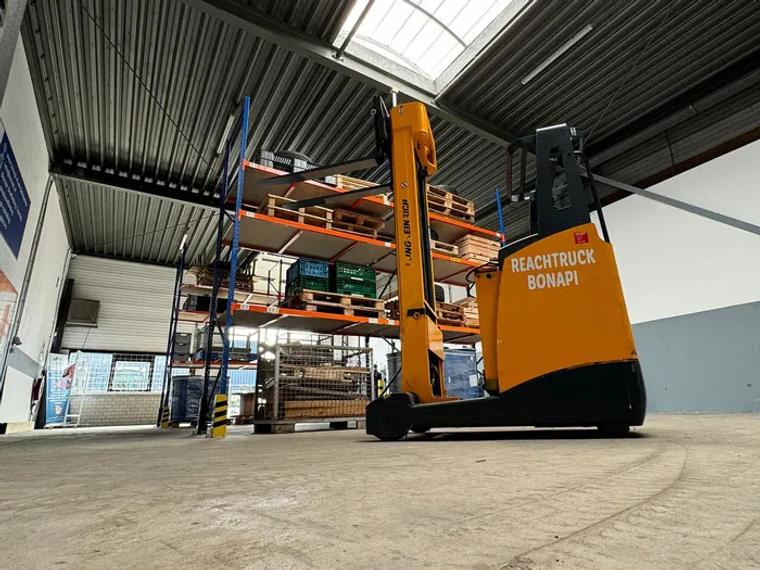
A reachtruck is a reach truck designed primarily for high-level storage. It is used mainly in warehouses with racking systems, where high lifting capacity and the ability to operate in relatively narrow aisles are important. A characteristic feature is its design, which allows the mast or fork carriage to extend towards the racking, depending on the specific model.
These design differences are precisely why experience gained on one type of truck should not automatically be treated as sufficient preparation for safely operating the other.
Heftrucks have a wide range of applications. You will find them in warehouses, manufacturing facilities, wholesale businesses, logistics centres, terminals and companies handling construction materials. They are well suited to loading and unloading goods and transporting pallets between different areas of a facility.
Typical tasks performed by a heftruck operator include:
Reachtrucks are much more closely associated with pallet storage in racking systems. Operators may work in large distribution centres, e-commerce warehouses, wholesale warehouses or storage facilities supporting production. Their tasks often involve retrieving pallets from racking and placing them at the appropriate storage levels.
The most noticeable difference concerns the operator’s position and the way the truck is manoeuvred. In a conventional heftruck, the driver generally sits facing the direction of travel. In a reachtruck, the operator’s position and the way the direction of travel is observed may be different, and the driving technique itself takes some getting used to.
Another difference is the working environment. A heftruck requires sufficient space to turn and is often used to transport loads across larger areas. A reachtruck is designed specifically for working between racking systems and placing loads at height.
The lifting system is also different. A reachtruck operator works with a mechanism that allows the load to be extended towards the racking without having to move the entire truck as close to it as would be necessary with some other types of forklift trucks.
Both types of equipment, however, require an understanding of basic stability principles. The weight of the pallet is only one of the relevant parameters. The load’s centre of gravity, lifting height, mast position and the specifications provided by the truck manufacturer are also important. Operators should be able to read the data plate and load capacity chart for the specific machine.
It is important to distinguish between two issues: the requirement to hold a specific document and the requirement to have the appropriate competencies.
Dutch legislation does not establish a single government-issued “heftruck driving licence” that every operator must hold in the same way as a driving licence for a car. However, this does not mean that an employer can allow just anyone to operate a forklift truck.
Under Article 7.17c(1) of the Dutch Arbeidsomstandighedenbesluit, the Working Conditions Decree, self-propelled mobile work equipment may be operated by employees who have the necessary “specifieke deskundigheid”, meaning appropriate specialist knowledge and skills.
In addition, Article 8 of the Arbowet requires employers to provide employees with effective information and instructions concerning their work, the associated hazards and the necessary safety measures.
For this reason, saying that “a heftruck certificate is legally mandatory” would be an oversimplification. The regulations primarily require appropriate knowledge, skills and instruction. Completing training and obtaining a certificate is a common way of demonstrating that an operator has been prepared to work safely. A company may also require a specific certificate under its own safety procedures, a client’s requirements or the rules applicable at a particular facility.
You should not assume that heftruck training automatically prepares you to operate a reachtruck safely – or vice versa.
Dutch regulations focus on “specifieke deskundigheid”, meaning the competencies required to operate a particular type of work equipment. From a safety perspective, what matters is whether the operator is genuinely prepared to use the machine they are expected to operate.
If your training covered only a conventional heftruck and the practical part was carried out exclusively on that type of truck, this does not automatically mean that you have been trained to operate a reachtruck. The two types of equipment differ in their handling characteristics, the way loads are handled and the environments in which they are typically used.
The same applies in the opposite direction. An experienced reachtruck operator may be highly skilled at placing pallets on high racking, but before operating a heftruck they should understand its handling characteristics, specifications and machine-specific hazards.
Before starting work, you should therefore check exactly what your training and the document you received cover. If a company uses both types of forklift trucks, the employer should make sure that employees have the competencies required to operate each of them safely.
Someone who has never operated a reachtruck may assume that the differences are limited to a few additional functions. In reality, the way many manoeuvres are performed is different.
A reachtruck operator must learn, among other things, how to approach a storage location accurately, position the forks correctly in relation to the pallet, and safely place and retrieve loads from racking. The operator must also continuously monitor the surroundings, as the truck is often used in warehouse aisles where racking, goods, other vehicles and employees are present.
Working at height is particularly important. A pallet raised high above floor level affects the stability of the truck-and-load combination. Operators cannot rely solely on the maximum capacity stated in the machine’s name or basic specifications. They must take into account the actual permitted load under the specific operating conditions.
This is why the ability to read a load capacity chart (lastdiagram) is an important part of operator training. It shows what load can be safely lifted under specific conditions.
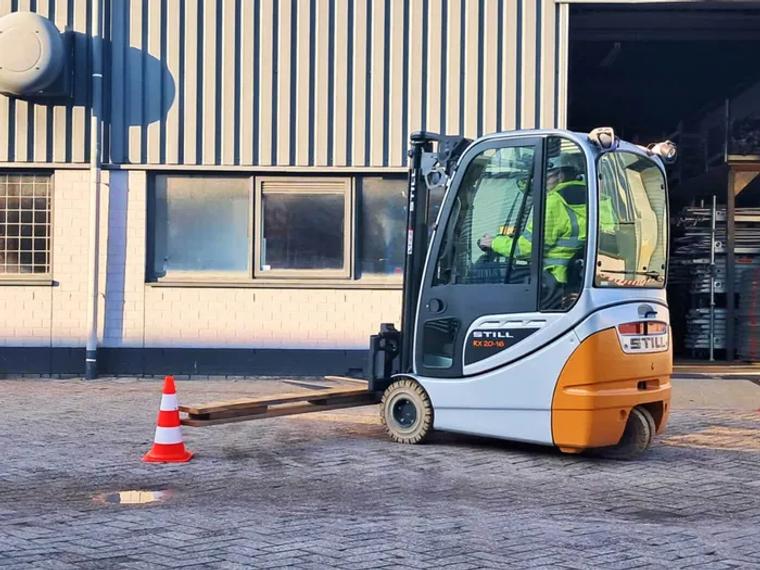
Safe forklift operation involves much more than driving forwards, reversing and lifting a pallet. Operators should know the equipment they are working with and understand the consequences of their decisions.
Important skills and knowledge include:
Dutch regulations also directly address traffic management. Article 7.17c of the Arbobesluit requires, among other things, effective traffic rules where mobile work equipment operates in areas where employees may be present. Employers should also implement measures to reduce the risk of employees being struck by moving equipment.
This means that operator training is only one element of workplace safety. The company is also responsible for properly organising the working environment.
If you have previously operated forklift trucks in Poland, you already have valuable practical experience, but you should still check the requirements of the specific employer before starting work in the Netherlands.
Do not assume that every Polish qualification or certificate will automatically be considered sufficient proof of competence for every type of forklift truck used by a Dutch company. The employer is responsible for workplace safety and may require additional training, workplace-specific instruction or verification of your competencies in accordance with its own procedures.
The specific equipment also matters. Two trucks belonging to the same category may differ in their controls, attachments, lifting height, load capacity and safety systems.
For employers, problems can arise when several employees work with different types of forklift trucks but their competencies do not match the tasks they actually perform. One employee can operate a heftruck, another a reachtruck, and when employees need to switch roles, it turns out that not everyone is properly prepared to take over a colleague’s duties safely.
The solution is to plan training around the equipment employees actually use. This makes it possible to train employees to operate heftrucks, reachtrucks or both types of equipment and clearly define the competencies they have acquired.
This is particularly important in warehouses and logistics centres, where demand for operators changes depending on the number of deliveries, orders and staffing levels on a particular shift. Having more properly trained employees gives the company greater flexibility without compromising safety standards.
If your company in the Netherlands uses heftrucks, reachtrucks or other types of warehouse trucks, make sure your employees’ competencies match the machines they actually operate.
Bonapi provides forklift training for individual employees and company groups. The scope of the training can be tailored to your team’s needs and the type of equipment used. This is a practical solution both when you need to train new operators and when employees already have experience but need to learn how to operate another type of forklift truck.
Check out Bonapi forklift training courses and ask about training for your entire team. A well-trained operator contributes to a safer workplace, while the company benefits from a team that can perform warehouse or facility tasks more efficiently.
Follow Bonapi on social media or subscribe to the newsletter to receive information about training courses and practical resources on safe working practices in the Netherlands.