User Panel
Forklifts
Search

Nicole
Dyrektorka działu finansów i administracji
In warehouses, logistics centres and manufacturing facilities, the terms forklift truck, reach truck and electric pallet truck (EPT) are used every day. If you are just starting a career in material handling or warehouse operations, these names may sound similar, but they refer to different types of equipment, different job responsibilities and different levels of operator competence. Whether you want to gain new qualifications or train your employees in Poland, it is worth understanding the differences before choosing a course.
The terms forklift truck, reach truck and EPT (electric pallet truck) are commonly used throughout the UK, the Netherlands, Belgium and in international logistics companies. They are also becoming increasingly common in Poland, particularly in businesses working with international clients or preparing employees for work abroad.
In simple terms:
In Polish legislation, these machines are generally classified under the broader category of powered industrial trucks subject to technical supervision, although the commonly used name remains “forklift.”
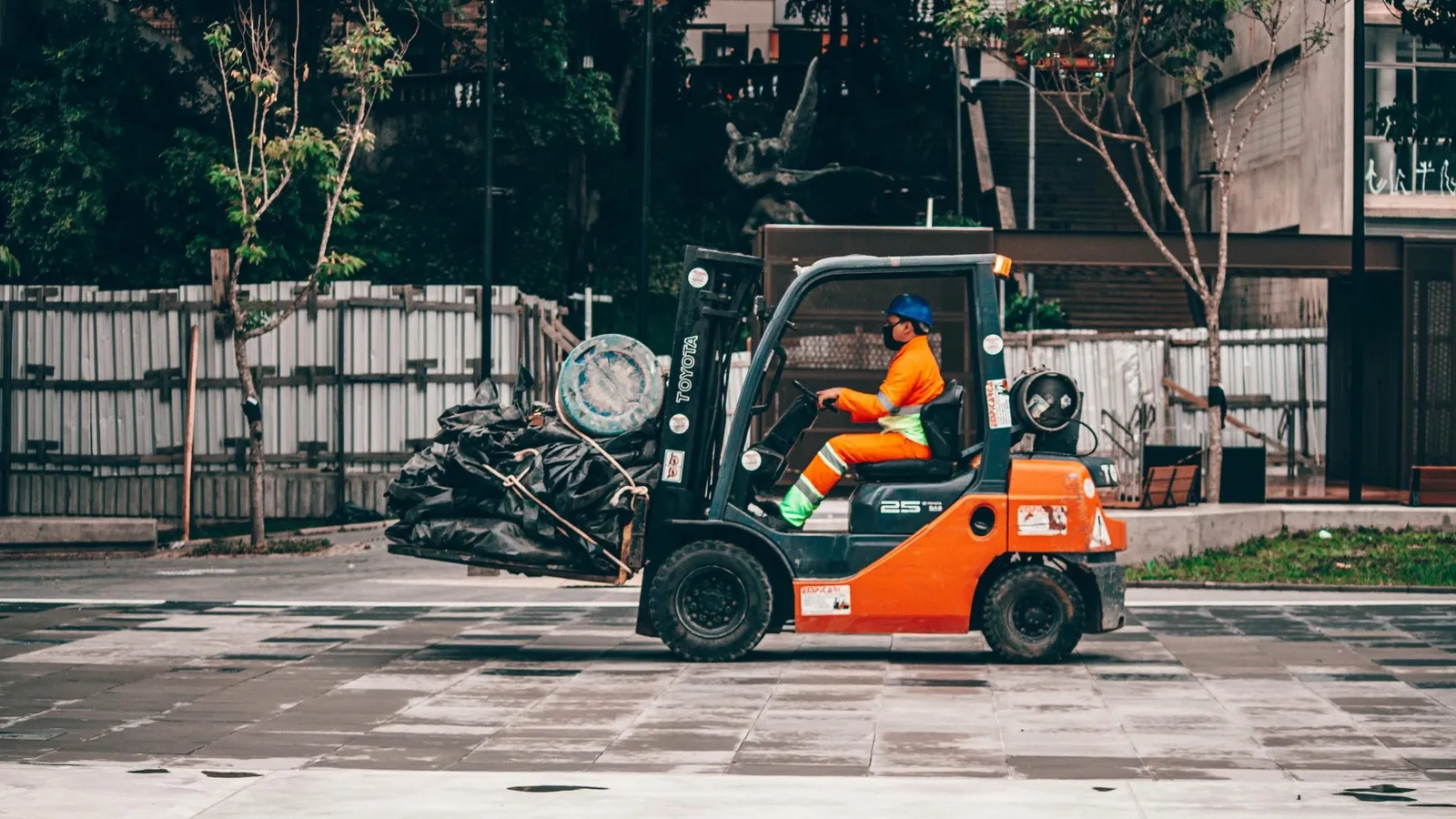
The forklift truck is the most common type of industrial truck. It features forks mounted at the front, a counterweight at the rear and is designed to lift, transport and stack palletised loads. The operator sits facing the direction of travel and typically works in warehouses, production facilities, loading bays or outdoor storage yards.
Counterbalance forklifts are ideal for moving heavier loads over short and medium distances. Depending on the power source, they can be used indoors or outdoors. Electric forklifts are widely used inside warehouses, while diesel or LPG-powered models are more common in outdoor environments and heavy industry.
Typical forklift operator duties include:
For many people, forklift certification is the best first step into warehouse logistics. Counterbalance forklifts are used across numerous industries, including logistics, manufacturing, construction, wholesale distribution, food production, furniture manufacturing, metalworking and automotive industries.
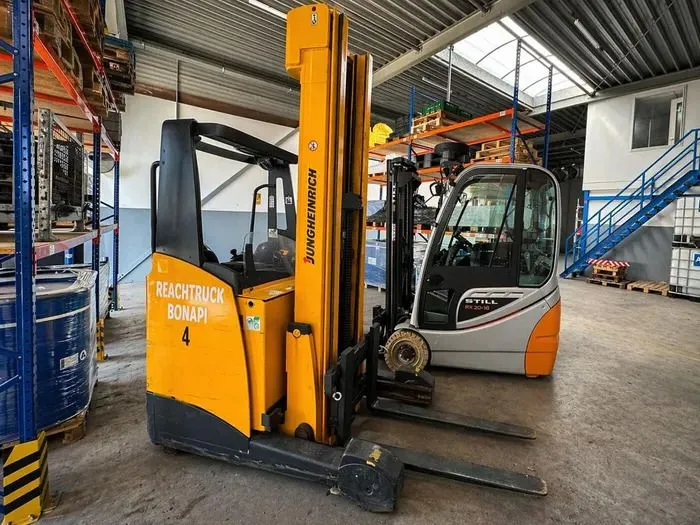
A reach truck is a more specialised warehouse vehicle. It is designed primarily for high-bay warehouses where precision, excellent visibility and the ability to manoeuvre in narrow aisles are essential. The operator usually sits sideways, while the mast or fork carriage extends forward to place or retrieve loads from pallet racking.
Unlike counterbalance forklifts, reach trucks are not intended for uneven outdoor surfaces. Their operating environment is a smooth warehouse floor with organised pallet racking systems. Reach truck operators frequently handle loads at considerably greater heights than standard forklift operators.
Typical reach truck tasks include:
Operating a reach truck requires greater accuracy than driving a standard forklift. Operators must accurately judge distances, lifting heights, load weights and pallet stability. Small mistakes at height can damage goods, warehouse racking or create serious safety risks.
EPT stands for electric pallet truck, also known as a powered pallet truck. It is used primarily to transport palletised goods over relatively short distances. Depending on the model, the operator either walks behind the truck or rides on an integrated platform.
Electric pallet trucks are extremely common in warehouses, supermarkets, distribution centres and parcel handling facilities. They are used for moving pallets quickly, preparing shipments, unloading deliveries and supplying picking areas. Although simpler to operate than forklifts or reach trucks, they still require appropriate training and safe operating practices.
Typical EPT duties include:
Unlike forklifts equipped with lifting masts, not every electric pallet truck is subject to the same certification requirements in every country. Nevertheless, employers remain responsible for ensuring that operators receive adequate training and are competent to use the equipment safely.
The easiest way to understand these machines is by considering where they are used.
A forklift truck is the most versatile option. It is suitable for loading docks, warehouses, production facilities and outdoor yards.
A reach truck is specifically designed for high-level pallet racking and narrow warehouse aisles.
An electric pallet truck (EPT) is intended mainly for horizontal pallet transport rather than lifting goods to storage locations.
The operator’s responsibilities also differ.
With an EPT, the focus is on safe movement through warehouse traffic, controlling speed and maintaining awareness of pedestrians.
Forklift operators additionally manage heavier loads, vehicle stability and loading or unloading heavy goods vehicles.
Reach truck operators require exceptional precision when handling loads at height inside narrow warehouse aisles.
In simple terms:
For employees, these represent different career paths. For employers, they determine which type of operator training is required for specific job roles.
If you are starting with no previous experience, the most practical first qualification is usually counterbalance forklift truck training. It offers the broadest range of employment opportunities and prepares operators for many different warehouse tasks.
Reach truck training is best suited to those planning to work in high-bay warehouses or modern distribution centres. It is an excellent progression for operators who already have experience with warehouse equipment and want to specialise.
EPT training can be a good entry point for warehouse assistants, order pickers or employees whose work mainly involves moving pallets rather than stacking goods. However, on its own, it usually provides a narrower range of career opportunities than forklift certification.
For many people, the most practical progression is:
For employers training larger groups of staff, the order should reflect actual workplace requirements. Employees responsible for unloading vehicles, operating high-rack warehouses or handling multiple types of equipment will require different training programmes.
Forklift and warehouse equipment operators are employed in far more than traditional warehouses. They work wherever palletised goods, raw materials or finished products need to be moved safely.
Typical sectors include:
For people planning to work abroad, understanding terms such as forklift truck, reach truck and electric pallet truck is an additional advantage. These are the names most commonly used in English-language job advertisements across the UK and throughout international logistics companies.
A quality training programme should offer far more than classroom theory. Operators need to understand vehicle stability, load capacity, the importance of the centre of gravity, safe travelling techniques and working safely around pedestrians.
Practical training should include realistic workplace manoeuvres rather than simply driving around an open area. Trainees should practise collecting pallets, placing loads accurately, operating in confined spaces and responding to common workplace situations. Reach truck operators should also gain experience working with warehouse racking at height.
For employers, training should be tailored to actual job roles and the equipment used within the business. Production employees who occasionally move pallets require different instruction from full-time warehouse operators working in busy logistics environments.
A competent operator is far more than someone who can drive a machine. They understand workplace risks and appreciate the consequences of poor decisions. A single mistake can damage goods, warehouse infrastructure or, more importantly, put colleagues at risk.
A skilled operator should be able to:
For employers, consistent training helps standardise safe working practices across entire teams, reducing misunderstandings and improving operational efficiency.
Bonapi’s Polish training centre provides an effective solution for companies wishing to prepare employees before they begin work either in Poland or overseas. Training in Poland simplifies organisation, removes language barriers and allows operators to build confidence before starting work.
However, employers should remember that legal requirements differ between countries and individual companies. Qualifications recognised in Poland may not automatically satisfy the requirements of employers abroad, who may request additional certification, local assessments or site-specific induction training.
Even so, completing professional training before travelling abroad gives employees a strong foundation in safe operating procedures, equipment handling, industry terminology and operator responsibilities.
If you are looking to improve your employment prospects, starting with counterbalance forklift truck training is usually the most versatile option. After gaining experience, you can decide whether additional qualifications such as reach truck or electric pallet truck training are appropriate.
If you are an employer, begin by analysing each role within your organisation. Identify which equipment employees use, how often they use it and under what conditions. Staff responsible for loading bays, high-level warehouse storage or order picking all require different competencies.
Before selecting a course, ask yourself:
Answering these questions helps ensure that training reflects real operational needs rather than simply matching a job title.
Forklift trucks, reach trucks and electric pallet trucks each have different applications, operating environments and levels of responsibility. If you want the broadest employment opportunities, counterbalance forklift truck training is the logical place to begin. Companies operating high-bay warehouses or large-scale distribution centres should also consider reach truck and electric pallet truck training for relevant employees.
Bonapi provides professional forklift training in Poland for individuals, businesses and corporate teams. Training programmes can be tailored to specific job roles and the equipment used within your organisation.
Professional operator training improves workplace safety, increases operational efficiency and opens the door to wider career opportunities. Follow Bonapi on social media or subscribe to the newsletter to stay informed about upcoming training courses and practical guidance for warehouse professionals.