User Panel
Forklifts
Search

Nicole
Director of Finance and Administration
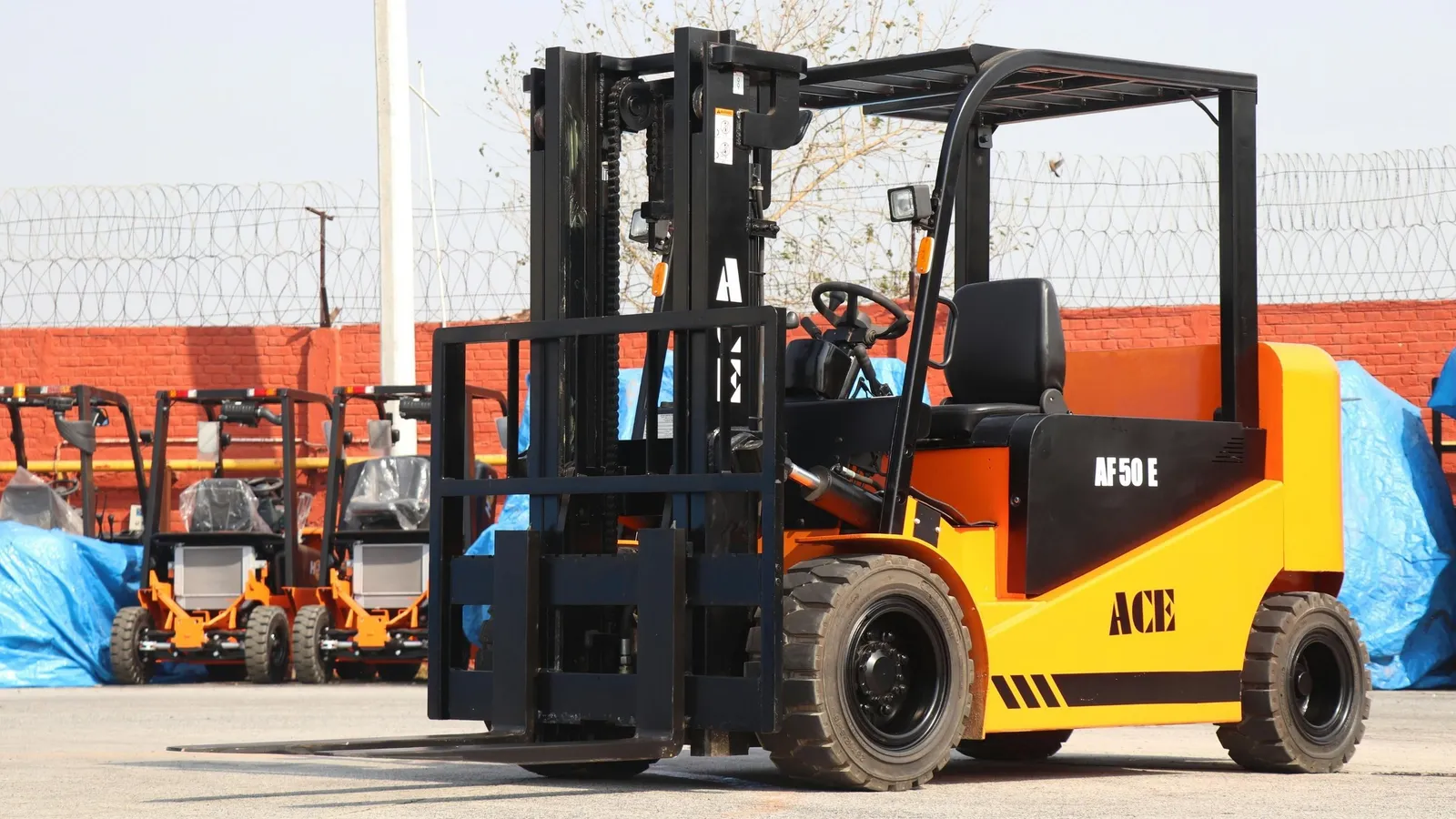
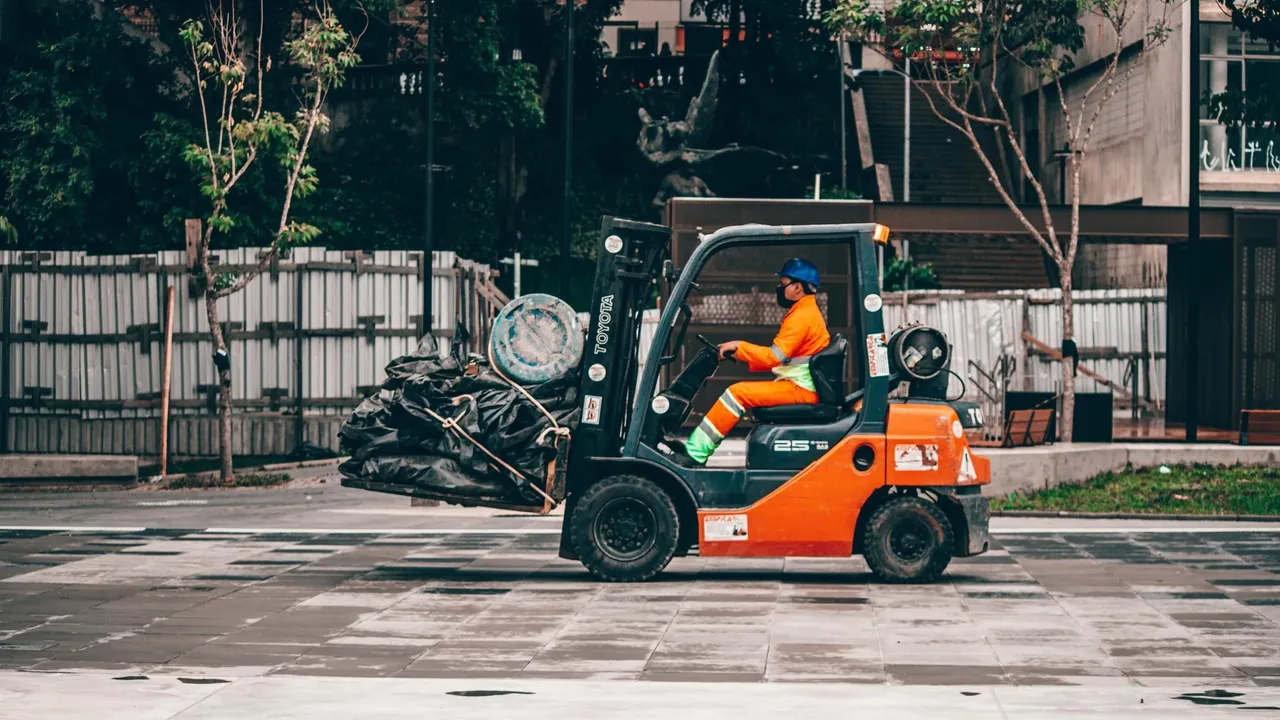
For many workers, Polish UDT qualifications are the first step towards working as an operator of a forklift truck, a mobile elevating work platform or a Manitou-type telescopic handler. The problem arises when you’re planning to move to the Netherlands and one company tells you, ‘The UDT is enough’, whilst another says, ‘You need a Dutch certificate’. The reality is more practical than formal: a UDT certificate can be strong proof of your qualifications, but it does not always automatically open the door to every job in the Netherlands.
The UDT (Technical Inspection Authority) verifies the qualifications of personnel who operate and maintain technical equipment subject to technical supervision. This applies, amongst other things, to lift trucks and mobile work platforms. The UDT website clearly states that persons operating and maintaining technical equipment subject to technical supervision must hold qualification certificates. In this regard, the UDT refers to the Act on Technical Supervision and the Regulation of 21 May 2019 on the verification of qualifications.
Once a Polish operator has passed the exam, they demonstrate two things: that they are familiar with the rules for the safe operation of the equipment in question, and that they are able to carry out the practical tasks required during the exam. The UDT also publishes the scope of theoretical and practical knowledge, as well as sample exam questions for specific types of equipment, including lift trucks and mobile work platforms.
For an employer in the Netherlands, such a document is therefore a compelling argument. It shows that the employee is not starting from scratch. However, this does not mean that a Dutch employer will always regard the UDT as a full equivalent of local training.
The safest answer is: not always, and not in every workplace. The Polish UDT certificate is a formal document confirming qualifications in Poland. In the Netherlands, however, the employer must demonstrate that the employee has been properly instructed, trained and is competent to use specific equipment safely under specific conditions.
The Dutch government portal Arboportaal states that many work tools can be used safely provided the user follows the operating instructions and has received information and guidance from their employer. At the same time, specific professional expertise is required for certain categories of equipment. Mobile work equipment, such as forklift trucks, is given as an example.
This is an important distinction. In the Netherlands, for many types of equipment, it is not merely a question of the name of the certificate, but of being able to demonstrate competence. An employer or client may accept a Polish UDT certificate, may request a translation of the document, may require additional on-the-job training, and in some sectors may expect a Dutch certificate, SOG certification or another industry-specific qualification.
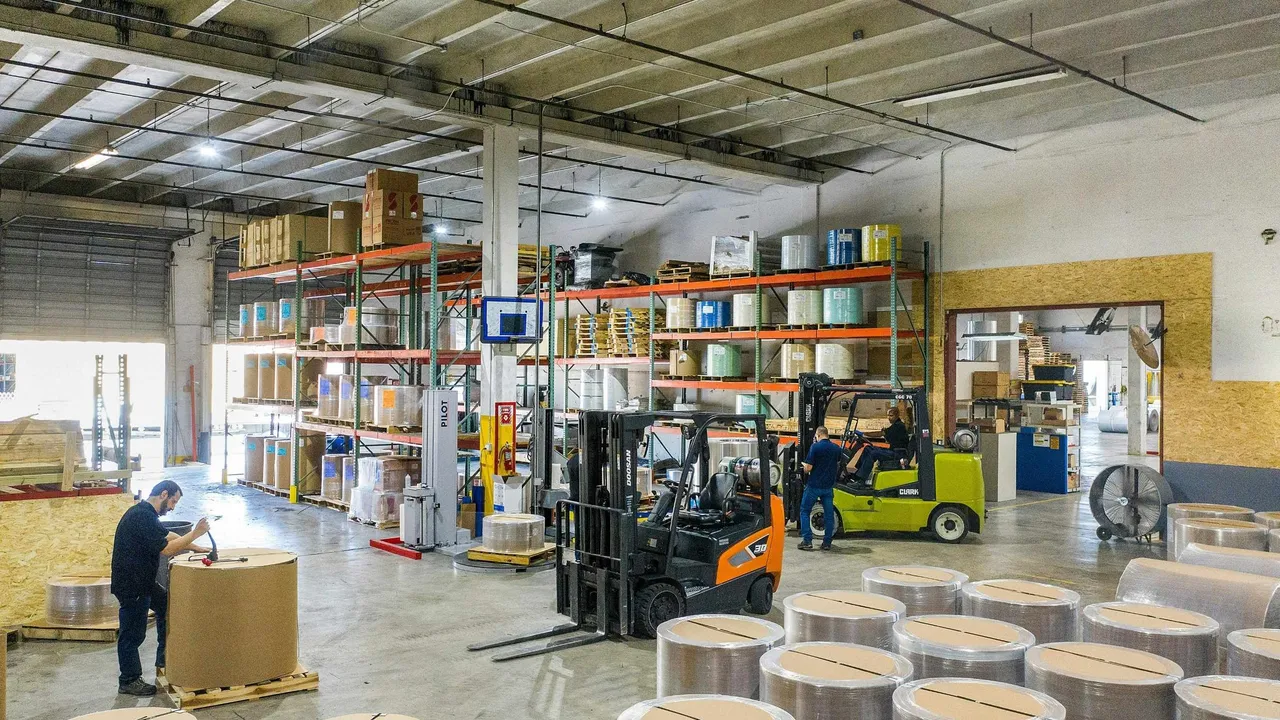
Polish operators most often enquire about forklift truck operators, as these are among the most popular roles in the Netherlands. Jobs may be in food warehouses, distribution centres, manufacturing plants, transport companies, ports, cold stores or sorting centres. The scope of duties varies: unloading lorries, moving pallets, order picking, stocking, working with a scanner, operating loading bays and liaising with the planning department.
For standard warehouse work, a Polish UDT certificate is often a major asset, particularly if the employee has experience and can manoeuvre equipment safely. However, one should not assume that a UDT certificate alone is always sufficient. The company may require an internal practical test, training on warehouse traffic rules, and instruction on batteries, charging, loading bays, high-bay racking or pedestrian zones.
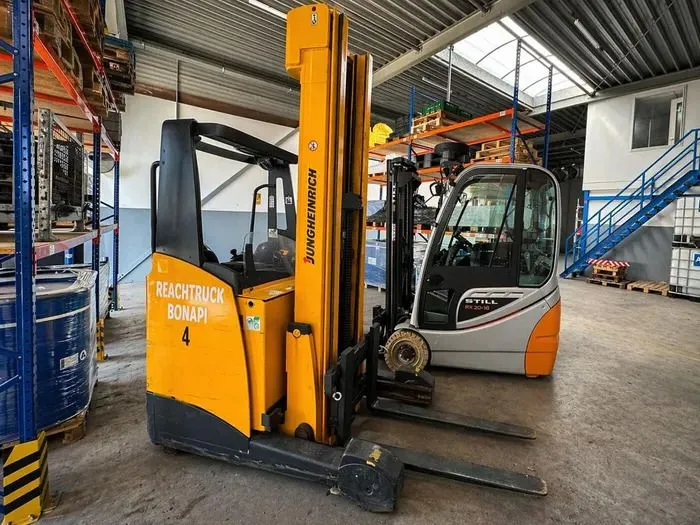
In the Netherlands, distinguishing between different types of equipment is also very important. Operating a standard forklift truck is different from operating a reach truck, and different again from operating an EPT, a pallet truck or a system truck. If your UDT certificate covers a specific scope, this does not automatically mean that your employer will allow you to operate every piece of equipment in the warehouse. The UDT itself specifies different examination scopes for lift trucks, including reach trucks and trucks where the operator is lifted together with the load.
The name ‘Manitou’ is often used colloquially, but it usually refers to a telescopic handler, or ‘verreiker’. This type of machinery is commonly found on building sites, in agriculture, during structural assembly, in outdoor logistics, in industry and during maintenance work. The operator transports materials, lifts loads to height, works with forks, attachments or a basket, and sometimes operates in difficult terrain.
This raises an important point: how the machinery is used matters. The risks involved in transporting pallets across a yard differ from those involved in lifting loads to a higher storey, and are different again from those associated with working with a man-access platform. Dutch regulations concerning work equipment and the lifting of persons are more specific when the machinery is used for working at height or for lifting people.
Arboportaal states that lifting or hoisting workers is generally permitted using equipment specifically designed for this purpose. The use of other work equipment fitted with a basket or platform may only be permitted in exceptional cases and provided that the safety conditions set out in the Arbobesluit are met.
A Manitou operator in the Netherlands should therefore have training tailored to the actual application of the machine. If the work takes place in the petrochemical sector, heavy industry or a facility subject to stricter procedures, the client may require not only general experience but also a specific industry certificate.
Mobile work platforms are used in construction, installation work, building maintenance, industry, logistics, the energy sector, telecommunications and cleaning work at height. An aerial work platform operator does more than simply operate the machine. They must assess the ground conditions, stability, weather conditions, overhead obstacles, the risk of collision, the presence of pedestrians and evacuation routes.
The Polish Technical Inspection Authority (UDT) regulates mobile work platforms, including wheeled, mast-mounted, suspended and stationary platforms. The UDT publishes examination materials and knowledge requirements for these devices, confirming that this is a separate area of qualification, rather than merely an ‘add-on’ to forklift truck operation.
In the Netherlands, local practice is also often a key factor when it comes to aerial work platforms. An employer may require on-the-job training, knowledge of the platform category, the rules for using safety harnesses and lanyards, pre-operation checks and emergency procedures. In industrial or petrochemical environments, an SOG-P qualification may be required for a ‘hoogwerker’.
SOG-P is a qualification scheme run by the SSVV, relating to work in high-risk environments. It is not a ‘typical Dutch all-purpose course’, but a set of qualifications for specific jobs, particularly in industry, the petrochemical sector, the energy sector and sites where VCA procedures apply.
Among the SOG-P qualifications, the SSVV lists, amongst others: working with mobile elevating work platforms in categories 1B, 3A and 3B; operating a forklift truck; operating a telehandler for lifting; and operating a telehandler for lifting and working at height. Most SOG-P qualifications are valid for 5 years.
This means that the Polish UDT certification may be a good starting point, but for a contract in the petrochemical industry in Rotterdam, Moerdijk, Geleen or at a large industrial site, the end client may expect SOG-P certification. This applies in particular when an employee operates equipment in high-risk areas, near process installations, hazardous substances or work covered by a permit-to-work scheme.
Forklift, Manitou and aerial work platform operators work across a range of industries. Each industry has its own specific characteristics, which is why simply saying ‘I’ve got the qualifications’ isn’t always enough.
The most common places of work are:
For an employee, this means one thing: it is worth preparing not only for the exam, but also for the real-world working environment. A forklift operator in a cold store needs different skills to a Manitou operator on a muddy building site. Someone working on a platform in a production hall must be mindful of overhead installations, the movement of overhead cranes, pedestrian zones and emergency procedures.
The best-prepared candidate not only has the relevant documents but also a clear set of skills. Before you set off, it’s worth sorting out a few things:
For companies putting together teams to work in the Netherlands, training in Poland can save a lot of trouble. An employee who has been prepared in advance goes through induction more quickly, understands safety rules better and is less likely to be barred from working on arrival.
This is particularly important for larger recruitment drives. If a group is due to be deployed to a warehouse, a logistics centre, a production plant or a construction site, the training can be tailored to the actual job role. Forklift operators working on loading bays are trained differently from those operating aerial work platforms, and again differently from staff who will be using telescopic handlers on site.
Proper preparation of the group includes theory, practical training and an overview of the realities of working in the Netherlands. Employees should be aware that in the Netherlands, simply ‘knowing how to drive’ is not enough. It is also important to check equipment before starting work, follow instructions, communicate with the team, respect designated zones and report hazardous situations.
The Polish UDT certificate is a valuable endorsement of qualifications, particularly when working with forklift trucks, aerial work platforms and certain types of material handling equipment. However, it is not advisable to promise employees that ‘the UDT certificate will always be sufficient in the Netherlands’. This depends on the equipment, the industry, the client, the workplace and the safety requirements.
In general logistics, the UDT certificate may be sufficient following additional on-the-job training. In the construction sector, when operating Manitou machinery or aerial work platforms, specific experience and training on the relevant equipment may be required. In the petrochemical or heavy industries, one often has to take into account VCA, SOG-P or additional client procedures.
The best strategy is to prepare the employee so that their documentation and skills match the reality of working in the Netherlands. Then, the UDT certificate is not just a piece of paper in their wallet, but part of their practical preparation for safe employment.
If you want to prepare yourself, your staff or an entire group for work in the Netherlands, start by gaining solid qualifications whilst still in Poland. Bonapi Polska provides training for individuals and companies planning to work in the Dutch market and wishing to minimise the risk of administrative and practical issues upon arrival.
Check out our forklift training courses held in Poland and prepare your staff to work safely in the Netherlands. We train both groups and individual staff members, helping to tailor the course content to the planned role and type of equipment.