User Panel
Forklifts
Search

Nicole
Director of Finance and Administration
A forklift licence in the Netherlands often determines whether an employee will be allowed to work in a warehouse, a logistics centre, a manufacturing facility or a transport company. For many people leaving Poland, this is one of the easiest ways to improve their chances of securing stable employment.
In the Netherlands, you will often come across the terms ‘heftruckcertificaat’ or ‘forklift certificate’. In practice, this is a document confirming that you are able to operate a forklift truck safely, are familiar with the basic principles of handling loads, and understand the risks associated with internal transport.
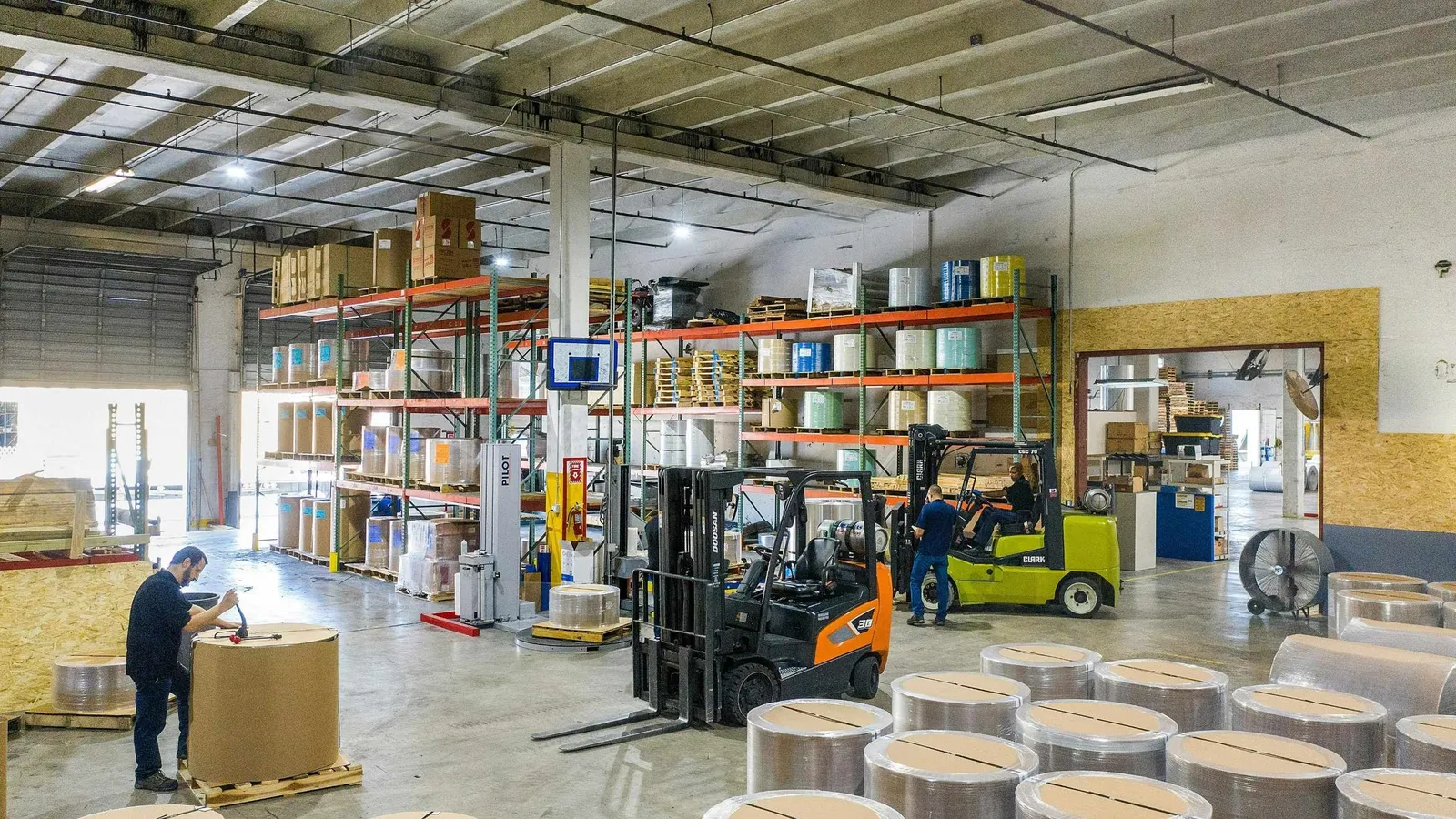
This is important because the job of a forklift operator is not simply a matter of ‘driving around the warehouse’. Operators work in close proximity to other people, racking, loading bays, lorries, industrial doors and goods of varying weights. A single mistake can result in damage to the load, an accident at work or a disruption to part of the logistics process.
It is worth clarifying one thing straight away: Dutch regulations do not specify a single, specific ‘state-issued forklift licence’ for every operator. However, Arboportaal – the official portal of the Dutch Ministry of Social Affairs and Employment – states that mobile work equipment, such as forklift trucks, usually requires specific knowledge and skills. Article 7.17c of the Arbobesluit states that self-propelled mobile work equipment should be operated by employees with the relevant, specific professional expertise.
A certificate is therefore the simplest proof that an employee has been trained. For the employer, it also forms part of their health and safety documentation, particularly when employing foreign nationals, temporary workers or entire teams posted to work in the Netherlands.
The answer is: not always explicitly as a separate document, but it is mandatory to demonstrate that the operator is trained and competent. This is a very important distinction.
Dutch labour law imposes an obligation on the employer to provide employees with appropriate instruction and information about work-related risks. This stems, amongst other things, from Section 8 of the Working Conditions Act (Arbowet), which concerns ‘voorlichting en onderricht’, i.e. information, instruction and training for employees.
In practice, this means that the employer must be able to demonstrate that the person operating the forklift truck:
If an accident occurs, simply stating that ‘the employee had experience’ may not be enough. The employer will have to demonstrate that training and instruction actually took place. A forklift certificate helps to document this.
In the Dutch labour market, it is generally accepted that a forklift certificate is valid for 5 years in most cases. This validity period is specified by Dutch training providers and organisations responsible for certifying operators. After this period, it is recommended that the certificate be renewed by attending a refresher course or retraining.
However, one must be wary of the phrase ‘valid by law’. For a standard forklift, this does not refer to a single central government licence with a statutory expiry date. The five-year period is primarily a market and health and safety standard, applied by many employers, employment agencies, logistics companies and training centres.
For you as an employee, this means a simple rule: if your certificate is more than five years old, a Dutch employer may consider it out of date. Even if you have extensive experience, the company may ask you to refresh your qualifications before you start work.
For a Polish company sending staff to the Netherlands, this means it is necessary to check documents in advance. It is better to do this whilst still in Poland rather than only after the team has arrived on site, when an employee might not be allowed to operate the equipment.
It is safest to plan a refresher course within five years of the date on which you obtained your certificate. It is not worth waiting until the last week, as the recruitment process, departure and authorisation to work often happen quickly. An employer may require a valid certificate as early as the interview stage or when signing the contract.
A refresher course is particularly worthwhile if:
It also makes sense to refresh training if an employee ‘knows how to drive’ but has never undertaken a formal course. In the Netherlands, it is not only practical experience that counts, but also the ability to demonstrate that the operator is familiar with safety rules and has been trained.
A refresher course is usually shorter than a full training course for beginners, but it should not be treated as a mere formality. Its aim is to assess and update the operator’s knowledge and practical skills.
It most commonly includes:
Good training should be based on real-life working conditions. The work of an operator in a cold store is different from that in a distribution centre, and different again on a building site or when loading heavy industrial components.
A forklift certificate opens doors to many industries. It is most commonly associated with warehouses, but operators are needed in many sectors of the Dutch economy.
The majority of job vacancies are in logistics and distribution. The Netherlands is one of Europe’s most important transport hubs, and the areas around Rotterdam, Venlo, Tilburg, Eindhoven, Breda and Utrecht have a highly developed network of warehouses and transhipment centres. In such locations, operators are responsible for unloading, loading, picking larger units, transporting pallets and liaising with the dispatch department.
In manufacturing, forklift trucks are needed to operate production lines, transport components, deliver packaging and collect finished products. This applies, amongst others, to the food, metal, chemical, engineering and packaging industries.
In agriculture and horticulture, operators work with crates, pallets, fertilisers, packaging and seasonal produce. In construction and engineering firms, forklift trucks are used to transport materials, structural components and equipment.
When planning a course, it is worth tailoring the training to real-world work situations. The term ‘forklift truck’ alone can be too general, as employers in the Netherlands often distinguish between several types of equipment.
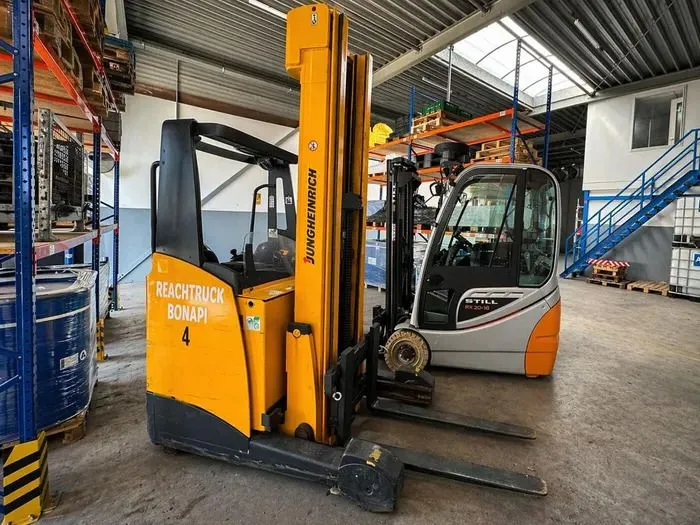
You’ll most often come across:
If an employee is to operate a reach truck, a training course for a standard front-loading forklift may not be sufficient. Similarly, someone who has only ever driven an EPT should not automatically assume that they can operate a high-lift forklift without further training.
For companies organising groups for a work placement, the best approach is to agree in advance with their Dutch partner on what equipment will be used on site. This allows the training in Poland to be tailored to the actual duties involved.
It depends on the type of document, the training programme and the specific employer’s requirements. Dutch employers usually look to see whether the certificate clearly confirms the operator’s competence and whether the training documentation is clear.
Ideally, the certificate should include:
A well-organised training programme in Poland can therefore help employees enter the Dutch labour market more quickly and without organisational chaos. This applies in particular to groups of employees who are due to start work in a single warehouse, production plant or logistics centre.
However, it is not worth promising that every qualification will automatically be accepted by every company. Requirements may vary. Some employers accept foreign training, whilst others require a qualification that complies with their own system or additional on-the-job training at the workplace.
In many Dutch companies, a forklift certificate alone may not be sufficient, particularly when work takes place on a construction site, at an industrial plant, at a terminal or at a company with high health and safety requirements. In such places, the VCA requirement is also often imposed.
VCA is not a forklift training course. It is a separate scheme covering safety, health and the working environment. The official organisation SSVV states that a VCA certificate is valid for 10 years, after which time the exam must be retaken.
Therefore, an employee may need two documents: a forklift certificate to confirm their ability to operate the equipment, and a VCA certificate to confirm their knowledge of the general safety rules required by the relevant employer.
It is worth planning this in advance. If you are travelling to the Netherlands as a forklift operator for an industrial site, ask the agency or employer whether a VCA certificate is required. If the company is sending a larger group, it is best to gather the contract requirements before the training.
A valid forklift certificate boosts your credibility. It shows that you take your work seriously and are ready to carry out your duties safely from day one.
For an employee, this is a real benefit. Up-to-date qualifications can help you find a job more quickly, get through the recruitment process and secure a better position when negotiating your pay. In many warehouses, operators with experience and a valid certificate offer greater flexibility to employers, as they can carry out more tasks than those without qualifications.
A refresher course also helps to re-establish good habits. After several years on the job, many operators drive efficiently but do not always follow the rules expected by their employer. The training serves as a reminder of how to assess risks, how to react when pedestrians are present, how to control the machinery and when to stop work.
For companies operating in Poland and working with Dutch business partners, training staff before they travel is often the most sensible option. It helps to avoid downtime on arrival, reduces organisational stress and provides greater control over documentation.
Group training in Poland is particularly effective when a company:
This solution is also convenient for employees. They can undergo training in Polish, understand the rules without any language-related pressure, and prepare for working in the Netherlands even before they leave.
The simplest way is to start by looking at the date on the document. If it has been about 5 years since the training, plan a refresher course. If the document does not have an expiry date, check the date on which you completed the course and ask your prospective employer whether they accept this certificate.
Make sure you’re ready for the renewal in good time if:
Don’t see a refresher course as a problem. It’s often a quick way to get your paperwork in order and improve your chances of finding a better job.
If you’re planning to work as a forklift operator in the Netherlands, or are preparing a group of workers for their departure, make sure you have up-to-date qualifications whilst still in Poland. It’s simpler, more convenient and safer than organising everything only after you arrive.
At Bonapi, we run forklift training courses for individuals, employees and groups being prepared for work in the Netherlands. We’ll help you sort out the requirements, choose the right training programme and prepare the documents that will provide practical support during recruitment or when fulfilling your contract.