User Panel

Advice
Search

Piotr
Founder & Owner
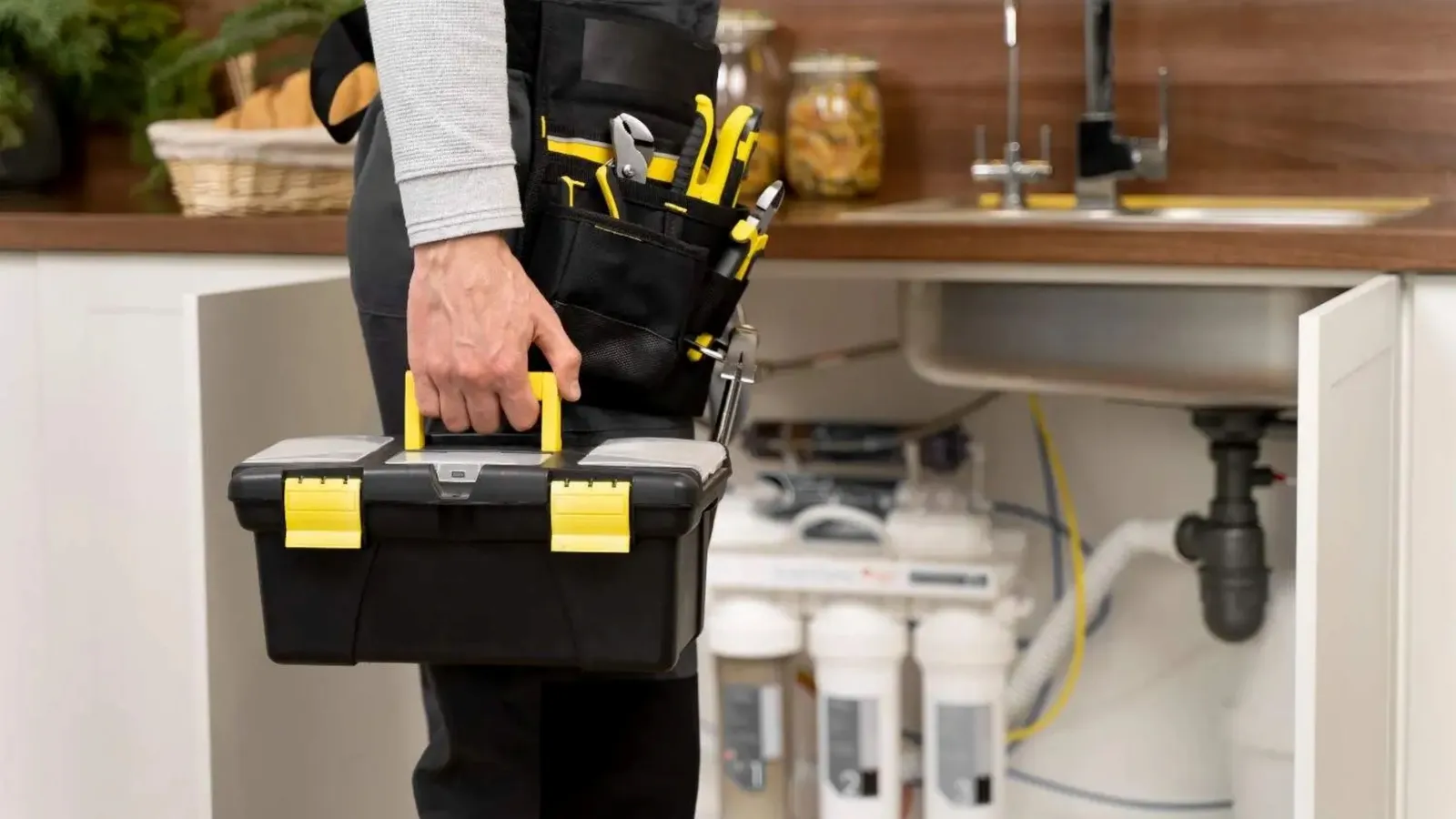
Being self-employed in the Netherlands offers a great deal of freedom, but it also requires good organisation and a sound understanding of the rules. As a self-employed person, you can look for work yourself, set your own rates and develop your own business, but you are also responsible for your taxes, insurance, paperwork and health and safety at work. For many people from Poland, this is an attractive option, particularly in the construction, engineering, logistics, assembly and services sectors. However, before you start working as a self-employed person, find out what self-employment in the Netherlands really entails and how to prepare for working with Dutch clients.
ZZP stands for ‘zelfstandige zonder personeel’, meaning a self-employed person without staff. In practice, this means that you run a one-person business and carry out assignments for clients as an independent contractor. You are not a permanent employee, you do not have a standard employment contract, and you are responsible for your own tax and social security contributions.
It is worth noting that ‘ZZP’ itself is not a separate legal form. The Dutch Chamber of Commerce (KVK) explains that being a freelancer or working as a ZZP is a way of working, not a distinct legal structure. Most self-employed people register their business as an ‘eenmanszaak’, or sole trader.
For many Poles, working as a ZZP is the next step after working through an agency or on a contract. You have more independence, but you cannot think of yourself as an ‘employee with an invoice’. Dutch regulations are increasingly focusing on whether self-employment is genuine or merely a substitute for a regular full-time job.
Self-employment is popular in many sectors in the Netherlands. You’ll most often find it in places where companies need flexible specialists for specific projects, refurbishments, maintenance or seasonal work. This applies both to those with extensive experience and to professionals who are just establishing themselves in the market.
The most common sectors in which Polish self-employed workers operate are:
In practice, it is not the job title itself that matters most, but the scope of responsibilities. If you carry out high-risk work, or enter a construction site, industrial plant or refinery, the client may require certificates confirming your knowledge of safety regulations. This is why the topic of VCA often comes up in relation to temporary agency work in technical sectors.
If you want to work as a self-employed person in the Netherlands, you usually start by registering your business with the KVK, or Kamer van Koophandel. Once registered, your business details are also forwarded to the tax authorities. The official website Business.gov.nl states that setting up a business involves registering your company with the KVK and registering for tax purposes.
To register, you will need, amongst other things, your personal details, your business address, a description of your services and your chosen legal form. If you live in Poland but wish to carry out assignments in the Netherlands on a temporary basis, the rules may differ. Business.gov.nl describes separately the situation of self-employed EU nationals who plan to work in the Netherlands for less than four months. In such cases, registration with the KVK is not always mandatory, but may be required by a client, for example, because of the KVK number.
On a practical level, you’ll need to be prepared for a few regular responsibilities:
If you are not familiar with the Dutch tax system, an accountant may quickly prove to be a sensible investment. A mistake in your tax returns can cost you more than a month’s worth of accounting services.
As a self-employed person, you may be liable for income tax and VAT. The Dutch tax authority, the Belastingdienst, assesses whether you are an entrepreneur for the purposes of income tax and VAT. Business.gov.nl states that self-employed people, like other entrepreneurs, must register with the tax authorities, who then determine their tax status.
In practice, this means that it is not enough simply to ‘have a business number’. You need to know whether you issue VAT invoices, when to submit your returns, and which costs you can claim on your tax return. The Belastingdienst provides separate information on VAT, VAT numbers, deductions and small businesses benefiting from the KOR (kleineondernemersregeling).
For some self-employed individuals (ZZP’ers), the self-employed tax allowance (zelfstandigenaftrek) is also important. The Belastingdienst states that you can claim this if you are classified as an entrepreneur for income tax purposes and meet the so-called ‘hour criterion’. Simply running a business does not, therefore, automatically entitle you to the allowance. You must meet certain conditions, which the tax authority may verify.
The ‘hourly criterion’, or ‘urencriterium’, relates to the time spent on your business. The Belastingdienst describes it as a condition applied to certain tax deductions for self-employed people. Working time may include not only the hours spent on a specific assignment, but also administrative tasks, preparing quotations, business purchases and travel related to your business. It is worth keeping a simple, regular record of your hours, as it can be difficult to recall the details after a few months.
One of the most important issues for self-employed people in the Netherlands is ‘schijnzelfstandigheid’, or bogus self-employment. This refers to a situation where someone formally issues invoices as a self-employed person, but in practice works as a regular employee. The official Business.gov.nl website describes false self-employment as a situation in which a self-employed person carries out a contract but is in fact an employee, for example because they do not decide independently when and how they carry out their work.
This is not a minor formal detail. From 2025, the Dutch tax authorities will be actively investigating bogus self-employment, a trend also noted by the KVK in its monitoring of the number of self-employed individuals.
What should you look out for? The risk increases when:
This does not mean that having just one client automatically disqualifies you from self-employed status. It does, however, mean that you must be able to demonstrate the independent nature of your business. It is worth ensuring you have a contract with a clearly defined scope of work, your own tools where possible, several sources of income, and documents confirming that you are operating as a self-employed person.
As a self-employed person, you do not have the same protection as a permanent employee. There is no automatic entitlement to sick leave, pay during downtime or statutory incapacity insurance. If you fall ill, lose a contract or damage a client’s equipment, the consequences could hit your wallet directly.
Therefore, a self-employed person should consider several types of insurance cover:
The Dutch government is planning to introduce compulsory incapacity insurance for the self-employed, but Business.gov.nl points out that the date on which this requirement will come into force is not yet known. It is therefore not worth waiting for the regulations to be introduced. If your income depends on your physical fitness, a single injury could bring your business to a standstill overnight.
Many self-employed workers carry out their work in environments where the risks are higher: at height, around machinery, with power tools, in noisy conditions, when handling chemicals, or within the operations of an industrial plant. In such conditions, health and safety is not an optional extra. It is a prerequisite for being allowed to carry out the work.
Business.gov.nl outlines the general health and safety rules for the self-employed. Among other things, the self-employed person must prevent hazards to others, work safely and responsibly, and minimise serious occupational risks.
In practice, clients may require you to:
If you run a sole trader business and work in the technical sector, your qualifications are part of your business’s credibility. Clients want to know that you will not only carry out the service, but that you will do so safely, in accordance with procedures, and without causing any downtime for the project.
VCA stands for Veiligheid, Gezondheid en Milieu Checklist Aannemers, which is a safety, health and environment system for contractors. In the English version, you will often come across the name SCC. The official Business.gov.nl website explains that the SCC/VCA certificate demonstrates that you and your employees operate safely and healthily within your business, even if you work as a self-employed person or freelancer.
For operational staff, the most common requirement is the B-VCA, which is the basic safety level. SSVV, the organisation that manages the VCA system, describes the B-VCA as a certificate that is usually required when you work for a contractor. It confirms basic knowledge of safety, health and the environment, as well as the ability to recognise hazardous situations.
For self-employed individuals, the VOL-VCA is particularly important. SSVV states that the VOL-VCA is intended for operational managers and self-employed individuals working as subcontractors for a VCA-certified company. This is important information, as many self-employed people focus solely on the basic certificate, whereas when working as a subcontractor, the client may expect a higher level.
The VCA does not replace professional experience or technical qualifications. Nor is it a magic ticket to any job. However, it is often a prerequisite for gaining access to a site, construction site or project. If you do not have it, you may lose the job even before you start negotiating your rate.
It’s best to plan your self-employment before taking on your first assignment. A haphazard start often leads to problems: an incorrectly set rate, a lack of funds to pay tax, an unclear contract, or being refused entry to a project due to a lack of certification.
A good start looks like this:
For many people from Poland, a good option is to obtain the required certificates before starting work in the Netherlands. Bonapi’s branch in Poland helps people prepare for the requirements of the Dutch labour market without having to organise training only after they arrive.
The first mistake is confusing the net amount with the invoice amount. A self-employed person’s hourly rate may look attractive, but you have to pay tax, insurance, accountancy fees, tools, travel costs and days off from that amount. If you compare it with a full-time salary, the result will be misleading.
The second mistake is a lack of documentation. A client may ask for your KVK number, third-party liability insurance policy, VCA certificate, proof of qualifications or your own equipment. If you don’t have these to hand, you’ll appear less professional than your competitors.
The third mistake is agreeing to terms that resemble full-time employment but without the associated job security. If you have a single client, fixed hours, instructions similar to those given to an employee and a lack of freedom, the risk of bogus self-employment increases. In the event of an inspection, both the client and the contractor could face problems.
The fourth mistake is putting off training ‘until later’. In technical sectors, ‘later’ often means losing a job. VCA, training in working at height, forklift licences or other certificates should be treated as tools for earning money, rather than as a mere formality.
Self-employment can be worthwhile if you have the right skills, are well-organised and can calculate your costs. It offers greater independence than working through an agency, but it also requires greater responsibility. Not everyone needs to go down this route straight away. Sometimes it’s better to gain experience, qualifications and contacts first, and only then move into self-employment.
Those who combine practical skills with sound formal training stand the best chance of success. A good self-employed professional isn’t just someone who’s good at welding, assembling, operating a forklift or working on a building site. It’s someone who keeps track of paperwork, knows the health and safety rules, communicates with clients and understands that they’re running a business.
If you want to operate in the Dutch market, think like an entrepreneur from day one. Your rate is important, but so are your contract, health and safety, taxes, insurance and qualifications. It is these factors that determine whether self-employment will be a stable step forward for you, or a source of stress.
If you run a sole trader business, are planning to become self-employed, or are sending staff to work in the Netherlands, make sure you obtain the necessary qualifications whilst still in Poland. The VCA certificate helps you meet the requirements of many Dutch clients and boosts your credibility when working in construction, industry, engineering and installation services.
At Bonapi, we train individuals, employees and entire groups. Check out our VCA training courses in Poland and prepare yourself or your team to work safely in line with the requirements of the Dutch market.


Author:

Piotr
Founder & Owner
Author:
Piotr
Founder & Owner