User Panel

Search

Katarzyna
Dyrektor operacyjny
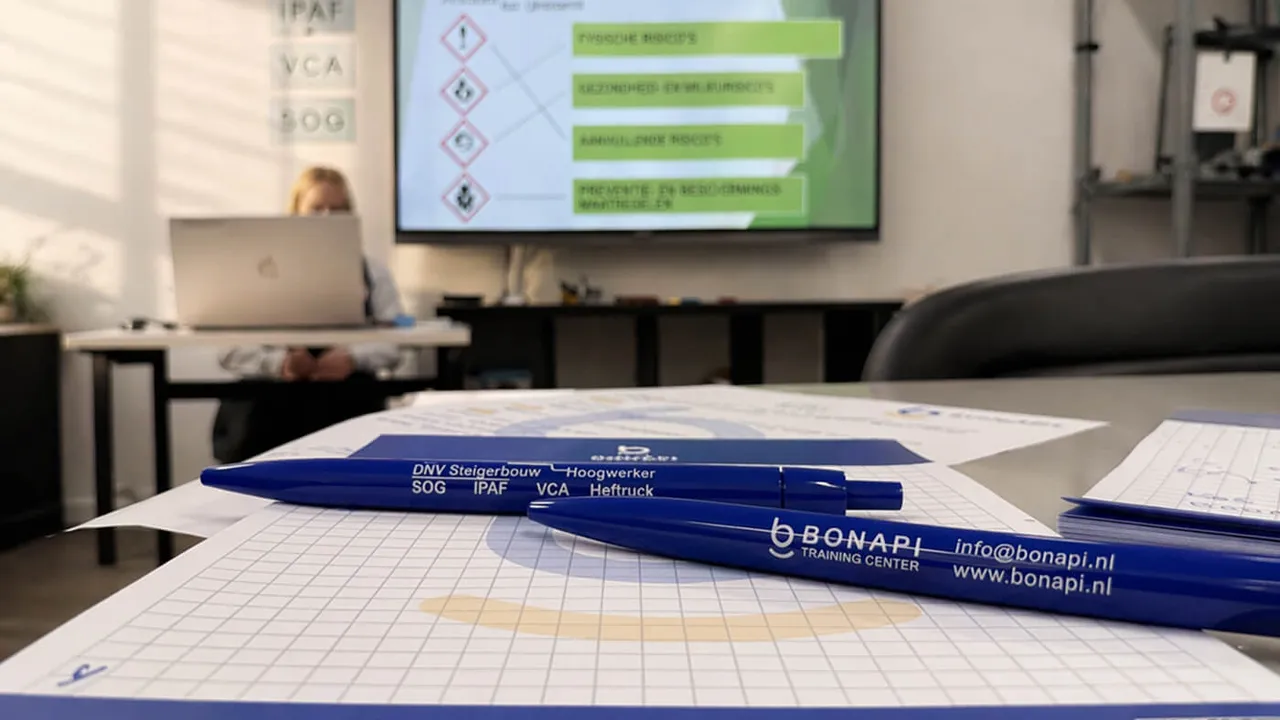
The SCC and VCA certificates are frequently listed as requirements in job advertisements in the Netherlands, Belgium, and Germany. To many people, they look like just another formal abbreviation, but in practice they can determine whether you are allowed to enter a construction site, an industrial facility, or a technical installation. If you are planning to work abroad, run your own business, or post employees to another country, understanding the VCA/SCC system will help you get started safely.
VCA stands for the Dutch term Veiligheid, Gezondheid en Milieu Checklist Aannemers, which translates as the Safety, Health and Environment Checklist for Contractors. In English-speaking contexts, the system is commonly referred to as SCC – Safety, Health and Environment Checklist Contractors. The Dutch government business portal explains that an SCC/VCA certificate demonstrates that a company or self-employed contractor operates safely and in accordance with health, safety, and environmental requirements.
In practice, VCA is a widely recognised safety standard used primarily in the Netherlands and Belgium. It applies to work carried out in high-risk environments such as construction sites, industrial plants, technical installations, petrochemical facilities, transport operations, and civil engineering projects. A VCA certificate is far more than just a document—it provides employers and clients with clear evidence that you understand the fundamental principles of working safely.
It is important to distinguish between two different levels of certification. A company may hold a VCA/SCC company certification, which covers its safety management system, procedures, and organisational processes. Individual employees, supervisors, managers, and self-employed professionals obtain a personal VCA diploma, demonstrating that they possess the knowledge required to work safely.
The terms SCC and VCA are often used interchangeably, but their usage depends on the country and language.
In the Netherlands and Belgium, the term VCA is the most commonly used. In German-speaking countries, the abbreviation SCC (Safety Certificate Contractors) is more common. Although the underlying principles are very similar, there may be differences in examination procedures, certification bodies, and local recognition requirements.
For job seekers, the most important point is simple: if a Dutch job advertisement requires VCA, employers are generally referring to an individual VCA diploma, most commonly Basic VCA or VOL-VCA. Companies operating in Germany may instead ask for an SCC certificate. According to Business.gov.nl (http://Business.gov.nl), Belgium also uses the VCA/SCC system, while Germany and Austria use SCC, which is comparable and accepted in certain situations within the Netherlands.
However, you should never assume that every certificate is automatically recognised everywhere. Acceptance ultimately depends on the client’s requirements, the country, the industry, and the specific project. Before travelling abroad or posting employees, it is always advisable to confirm exactly which certification your client requires.
VCA is not a legal requirement for everyone working in the Netherlands. The Dutch government states clearly that SCC/VCA certification is not mandatory by law, although clients may require it to ensure that work is carried out safely.
This distinction is important. Legally, there are positions where VCA is not specifically required. In reality, however, many employers will not allow you onto a construction site, industrial facility, refinery, technical warehouse, or production plant without a valid VCA diploma. For employers, allowing uncertified personnel onto site creates unnecessary risks, including delays, compliance issues during inspections, breaches of client requirements, and increased liability in the event of an accident.
For this reason, VCA has become an industry standard rather than simply a legal formality. It does not replace site-specific safety induction, medical examinations, trade qualifications, or equipment-specific operator training. Instead, it demonstrates that you understand hazard identification, risk assessment, emergency procedures, and safe working practices.
VCA certification is most commonly required wherever work involves risks such as injury, fire, explosion, heavy machinery, vehicle movements, hazardous substances, or working at height. Business.gov.nl (http://Business.gov.nl) lists industries where clients frequently require SCC/VCA certification, including construction, scaffolding, electrical engineering, civil engineering, transport, and the petrochemical sector.
Typical occupations include:
It is important to note that VCA alone does not qualify someone to operate forklifts, mobile elevating work platforms (MEWPs), overhead cranes, or scaffolding systems. Separate operator training and certifications may still be required. VCA provides the essential safety foundation upon which these additional qualifications are built.
There are three main certification routes: Basic VCA, VOL-VCA, and VIL-VCU. The appropriate option depends on your responsibilities and whether you are responsible only for your own work or also for supervising others.
Basic VCA is designed for operational employees performing practical work on construction sites, industrial facilities, technical installations, warehouses, or assembly projects. The course and examination cover essential workplace safety topics including hazard recognition, personal protective equipment (PPE), safe use of tools and machinery, and emergency procedures in case of fire or accidents.
VOL-VCA is intended for supervisors, foremen, team leaders, operational managers, business owners, and self-employed professionals responsible for organising work. According to the Dutch examination institute PBNA, VOL-VCA is specifically designed for personnel with supervisory responsibilities, while Basic VCA is intended for operational workers.
VIL-VCU is aimed at recruitment agencies, staffing coordinators, and personnel involved in supplying temporary workers to companies requiring VCA-certified employees. The programme focuses on safely assigning temporary workers, legal responsibilities, communication, and supervision. For recruitment agencies working with Dutch clients, VIL-VCU is an important organisational certification.
Effective VCA training is not about memorising examination questions. Its purpose is to help participants understand workplace hazards and prevent accidents before they occur. The training addresses common risks encountered in construction, manufacturing, logistics, and engineering environments.
Typical course content includes:
VOL-VCA places greater emphasis on supervision, work planning, toolbox talks, leadership, and operational responsibility. Supervisors are expected not only to work safely themselves but also to recognise unsafe situations, stop dangerous work, and ensure that safety procedures are consistently followed.
The VCA examination is computer-based. Candidates answer multiple-choice questions covering workplace safety, health, and environmental protection. PBNA identifies three principal examination types: Basic VCA, VOL-VCA, and VIL-VCU, depending on the candidate’s role.
Basic VCA is intended for operational employees, while VOL-VCA includes additional supervisory content. VIL-VCU focuses on personnel working within employment agencies and labour providers. According to PBNA, candidates must achieve a minimum score of 65% to pass the examination.
Candidates must present valid identification before being admitted to the examination. After successfully passing, the diploma is entered into the official register, allowing employers and clients to verify its validity.
A VCA diploma remains valid for 10 years. Its validity is recorded in the SSVV Central Diploma Register (CDR). The register allows employers to verify VCA diplomas as well as other recognised qualifications such as SOG Petrochemie, SVWOH, and NOGEPA certifications, including their expiry dates.
This provides an additional safeguard. Even if you lose your paper certificate or wallet card, your qualification remains officially recorded in the register. Employers can verify your diploma using your personal details or certificate number. It is therefore important that your personal information—particularly your name and date of birth—is recorded accurately.
Once the certificate expires, you must successfully complete the examination again. Professional experience alone does not extend the validity period.
For workers relocating from Poland, VCA is often one of the first qualifications requested by recruitment agencies, Dutch employers, or contractors. This is particularly true for jobs in construction, industrial installation, manufacturing, technical logistics, and maintenance.
Obtaining VCA certification before leaving Poland offers several practical advantages. You can prepare thoroughly without the pressure of your first working day abroad, and it is generally easier to understand complex safety concepts when training is delivered in your native language. Employers also recognise that you arrive ready to work in an environment where safety is taken seriously.
This is especially valuable if you are working in the Netherlands for the first time. Workplace procedures, signage, instructions, and working practices may differ significantly from those you are familiar with in Poland. VCA provides a solid foundation before you enter a construction site or industrial facility.
VCA is equally important for Polish companies sending teams to work in the Netherlands, Belgium, or Germany. From the client’s perspective, price and availability are only part of the equation. Clients also want assurance that workers understand safe working practices and that the company can demonstrate appropriate preparation.
Training employees before a project begins reduces the risk of costly delays. Workers without the required certification may be refused entry to the project site, resulting in disruption, additional costs, revised schedules, and damaged client relationships.
Companies should consider VOL-VCA for supervisors and team leaders. Organisations operating through recruitment or staffing services may also benefit from VIL-VCU certification. The appropriate certification level should always reflect the employee’s actual responsibilities rather than simply the lowest examination cost.
Yes, very often they do. Business.gov.nl confirms that SCC/VCA certification also applies to self-employed professionals and freelancers.
If you operate your own business and carry out technical, installation, construction, or industrial work for Dutch clients, VCA may be required under your contract or before you are allowed access to the worksite. Many self-employed contractors choose VOL-VCA, as they are responsible for organising their own work, assessing risks, and communicating directly with clients.
For independent contractors, VCA also demonstrates professionalism and shows clients that you understand local safety standards and are capable of working within the systems they expect.
The process is straightforward:
If you are arranging training for a group of employees, it is advisable to identify each participant’s role and responsibilities beforehand. Operational workers, supervisors, and staffing coordinators require different certification levels. Selecting the correct course from the outset saves time and ensures compliance with project requirements.
Bonapi provides VCA training for both individuals and corporate groups. The courses are suitable for employees preparing to work abroad, Polish companies carrying out international contracts, and employers wishing to train entire teams before deployment.
The most important consideration is whether your diploma can be verified through the official SSVV Central Diploma Register after you pass the examination.
Be cautious of providers advertising “VCA certificates without an exam” or promising certification within an unrealistically short timeframe without proper assessment. Such documents may not be recognised by Dutch employers and can quickly cause problems, as most clients routinely verify certificates in the official register.
Before enrolling, ask:
A reputable training provider should recommend the certification appropriate to each person’s role rather than offering the same option to everyone.
A VCA certificate does not automatically guarantee employment, but it significantly increases your credibility. It demonstrates that you understand essential safety principles and know how to work responsibly in high-risk environments. In technical industries, it is often a prerequisite for interviews, contract awards, or even gaining access to project sites.
For employees, this means greater flexibility and access to a wider range of job opportunities. For employers, it reduces organisational risks and enables projects to begin more efficiently.
Most importantly, however, VCA promotes a proactive approach to workplace safety. It teaches people to recognise hazards before accidents occur. When working abroad—where language barriers, unfamiliar procedures, and time pressure are common—this knowledge becomes especially valuable.
If you are planning to work in the Netherlands, Belgium, or Germany, prepare before you leave. Bonapi Poland provides VCA training for individuals, company employees, and complete teams preparing for international projects. We help you choose the appropriate certification level - Basic VCA, VOL-VCA, or VIL-VCU.
We can train your employees, supervisors, or entire project teams, making it easier to meet your international client’s requirements, reduce the risk of project delays, and equip your workforce with practical safety knowledge that will prove valuable from their very first day on site.