User Panel
Search

Katarzyna
Operations Director
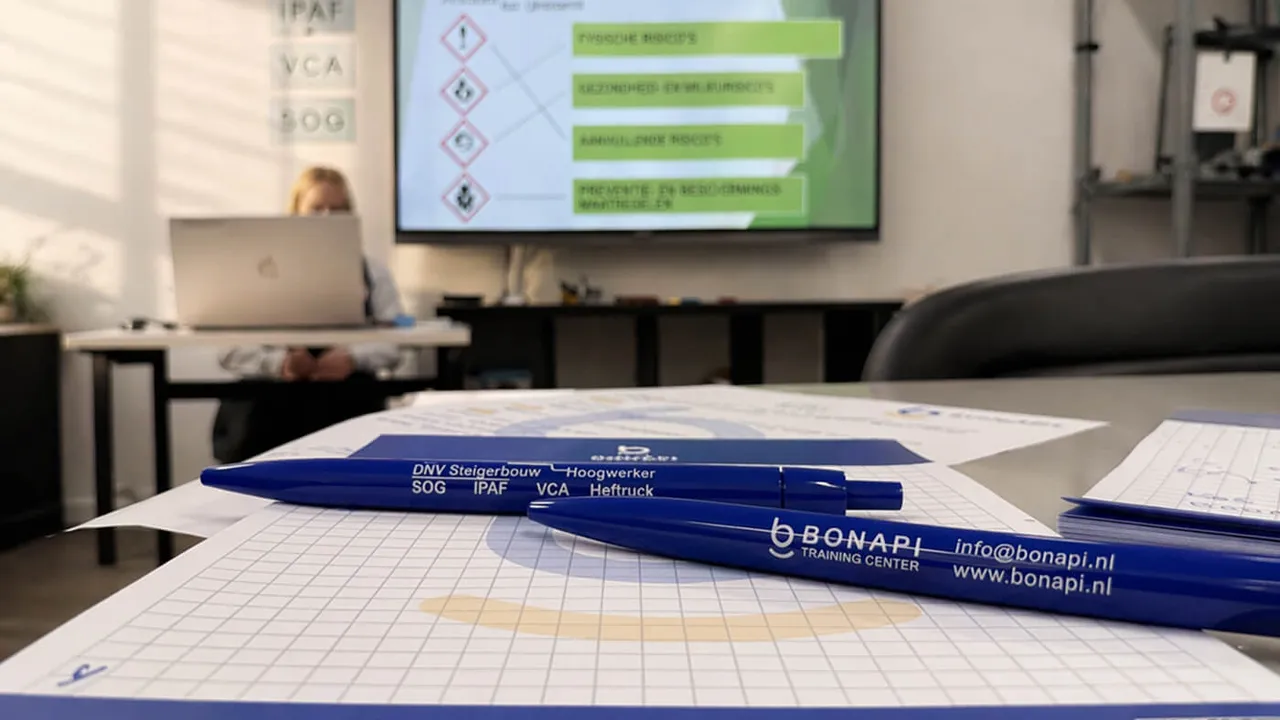
The VCA certificate is often mentioned in job adverts in the Netherlands, particularly in the construction, manufacturing, logistics, petrochemical and technical sectors. If you’re planning a trip or sending staff on a project to the Netherlands, the question naturally arises: is it better to complete the VCA in Poland or once you’re there? The answer depends on your departure date, the language of the exam, the type of role, and whether you’re organising the training for yourself or for a whole group.
What is the VCA certificate and what is it for?
VCA, which stands for Veiligheid, Gezondheid en Milieu Checklist Aannemers, is a system relating to health, safety and the working environment. In practice, many Dutch companies require employees and subcontractors to hold a valid VCA certificate before allowing them to work on a project.
This most commonly applies to locations where there is an increased risk: construction sites, industrial plants, refineries, warehouses, structural assembly, installation work, maintenance work and work at height. VCA confirms that you are familiar with the basic principles of safe working, understand the risks and are able to respond in accordance with procedures.
It is important to distinguish between two things straight away. VCA is not simply the ‘Dutch equivalent of Polish health and safety’ in the straightforward sense. It does not replace all an employer’s obligations or on-the-job training. However, it is a very important industry standard which, in many sectors, determines whether you will be allowed onto a site, construction site or project.
Official VCA certificates are entered into the Central Register of VCA Certificates, maintained in the Netherlands by the SSVV. The register allows an employer or client to check whether a person actually holds a valid certificate. VCA and VCU certificates are generally valid for 10 years.
Before you decide where to take your VCA training, you need to know which certificate you require. A different exam is taken by a manual worker, a different one by a foreman, and yet another by someone working in the field of temporary agency work.
You will most commonly come across three options:
The B-VCA exam usually lasts 60 minutes and consists of 40 questions. According to PBNA examination guidelines, the pass mark is 65 per cent correct answers. The B-VCA exam is available in various languages, including Polish, through many examination providers. The situation is more limited for the VOL-VCA: according to information provided by VCA organisers, the VOL-VCA exam is available in fewer languages, most commonly in Dutch, English, German or French.
Taking the VCA in Poland is often the most convenient option when you’re just getting ready to leave. You’ve got time, so you can take the training at your own pace, ask questions in Polish and sit the exam without the pressure of your first day at work abroad.
This is particularly important if you’re travelling to the Netherlands for a specific project and your employer expects you to arrive with your certificate already in hand. In such cases, postponing the exam could result in downtime, a delay in your start date, or even the loss of the assignment.
VCA training in Poland also works well for groups of employees. A company can train a team before they leave, organise the paperwork and minimise organisational chaos upon arrival in the Netherlands. For the employer, this is a tangible benefit: the group starts the project fully prepared, rather than having to find a date for the exam.
The biggest advantage is the language. If you’re studying in Polish, you’ll find it easier to understand concepts relating to risk, personal protective equipment, working at height, work permits, chemical hazards and evacuation procedures. Safety isn’t just about ‘cramming for the test’, but about genuinely understanding the situation in the workplace.
The second advantage is less pressure. In the Netherlands, you often sit the exam at a time when you’ve already sorted out accommodation, your commute, a new job, a new environment and the stress of moving abroad. In Poland, you can prepare in advance and set off with one less thing to worry about.
Another benefit is that it’s easier for companies to organise. If Bonapi’s Polish branch trains a group of employees, the date, scope of preparation and language of the training can be tailored to the team’s actual needs. This is a good solution for agencies, subcontractors, and construction, technical and manufacturing companies that send staff to the Netherlands.
The pros include:
The main drawback is simple: you must ensure that the exam is an official one and that the certificate is entered into the relevant register. A certificate of attendance alone is not always sufficient. An employer in the Netherlands may check the certificate against the register and expect a document issued by a recognised examination centre.
This means that before enrolling, you must ensure that the course concludes with an official VCA exam and that, upon passing, you will receive a verifiable certificate. DEKRA points out that a training card or ID alone is not proof of VCA qualification; what matters is the ability to verify the certificate in the relevant register.
A second limitation may be the language requirement at higher levels. B-VCA is widely available in many languages, but for VOL-VCA, the choice of exam language is more limited. If you need VOL-VCA, you must check in which language you can realistically sit the exam and whether you feel confident in that language.
The third drawback concerns people who are already working in the Netherlands. If you live locally, are close to an examination centre and need a quick appointment, travelling back to Poland just for training may be impractical. In that case, a course or examination in the Netherlands may be a better option.
Taking the VCA in the Netherlands makes sense if you’re already working there, live close to the exam centre, or need a very quick appointment. In large cities and industrial regions, it’s easy to find exam centres, and employers often refer staff to specific organisers.
This option also works well if you work in an international team and use English or Dutch on a daily basis. Taking the exam in the language you use at work can help you familiarise yourself with the vocabulary you’ll later use on a project: LMRA, work permit, PPE, emergency procedure, hazardous substances or evacuation route.
For those planning a long-term career in the Netherlands, on-site training can be a good introduction to the local safety culture. You’ll learn terms that you’ll later hear from your manager, health and safety coordinator, client or inspector.
The biggest advantage is the availability of dates and venues. In the Netherlands, VCA is standard practice in many sectors, so exams are held regularly. If you’re already there, you can fit a date around your work schedule more easily.
The second advantage is exposure to the language used on Dutch projects. Even if you take the B-VCA in Polish, the training itself and the working environment can help you become familiar with local terminology. For those who want to progress in their careers, run their own business or lead a team, this is invaluable.
The third benefit relates to emergency situations. If your employer suddenly requires a VCA certificate and you’re already in the Netherlands, taking the exam locally may be the quickest way to resolve the issue. There’s no need to plan a trip, take time off work or organise training in Poland.
The advantages of VCA in the Netherlands are:
For many Poles, the biggest drawback is the stress caused by language barriers and organisational issues. Even though the B-VCA can be taken in Polish with many providers, all communication regarding the training, travel arrangements, regulations, confirmations and on-site work is often in English or Dutch. For those who have only just arrived, this is an unnecessary burden.
The second problem is time. If an employer requires VCA certification before starting a project, every day without the certificate could mean no work. In practice, you may find yourself already in the Netherlands but unable to start a job because you are waiting for an exam date.
The third drawback is that it’s less convenient for groups. If a company sends 10, 20 or 30 employees, training them all only once they’re in the Netherlands can be logistically more difficult. You have to coordinate dates, transport, accommodation, shift patterns and the availability of places. For companies, it’s often simpler to train the team in Poland before they leave.
If you are an employee and are only just planning your move, in most cases it makes more sense to complete the VCA in Poland. It gives you greater peace of mind, makes it easier to liaise with the organiser, and means you can leave with the certificate already in hand. This is particularly important if you are applying for a job through an agency, or if you are heading to a construction site, a manufacturing plant, an industrial setting or a logistics role.
If you’re already living in the Netherlands and have a job that requires you to obtain the certificate quickly, taking the course locally may be more convenient. In that case, practical considerations are key: the date, the language of the exam, travel arrangements, and whether your employer accepts that particular provider.
It’s a good idea to ask yourself four questions:
If the answer to the first three questions is ‘yes’, Poland will usually be the better choice. If you’re already there and the earliest available date is what matters, the Netherlands may be the more convenient option.
For companies, the situation is slightly different from that of an individual employee. What matters here is not only the exam itself, but also the organisation of the entire process: deadlines, documentation, communication with staff, the level of preparation and the risk of project delays.
If you’re sending a group to the Netherlands, VCA training in Poland gives you a great deal of control. You can train everyone at the same time, ensure that employees understand the rules and gather the necessary documents before departure. This minimises situations where one or two people hold up the team’s start because they lack the required certificate.
The quality of preparation is also important for companies. An employee who understands the VCA rules finds it easier to settle into a Dutch project. They know what a pre-work risk assessment involves, and understand the importance of instructions, personal protective equipment, signage, emergency procedures and communication with their supervisor.
Group training in Poland is a good option for:
The most important thing is not to base your decision solely on price. A cheap course without an official exam or without the possibility of verifying the certificate may prove to be of no use. A Dutch employer is not obliged to accept a document that cannot be verified.
Before you enrol, please check:
Don’t assume that everyone needs the same certificate either. A production worker usually needs a B-VCA, but a foreman, a self-employed fitter or a team leader may need a VOL-VCA. A coordinator at a recruitment agency may need a VIL-VCU. If in doubt, it is best to check the specific client’s requirements before enrolling.
If you want a smooth start in the Netherlands, taking the VCA in Poland is often the better option. This applies particularly to those who are just setting off, have a limited command of a foreign language, or are heading to a project where the certificate is a prerequisite for employment.
If you’re already in the Netherlands, have easy access to an examination centre and need a quick appointment, taking the exam locally may be more convenient. There’s no one-size-fits-all answer. However, there is a simple rule: it’s best to obtain your VCA certificate wherever you can prepare thoroughly, pass the exam without unnecessary stress and receive a document accepted by your employer.
For companies sending staff to the Netherlands, training in Poland is usually the best option. It allows them to organise the entire process, train a group before departure and minimise the risk of downtime for the client.
Are you planning to go to the Netherlands to work, or do you want to prepare your team for a project? Bonapi runs VCA training courses in Poland for individual employees and corporate groups. We help you choose the right type of training, explain the differences between B-VCA, VOL-VCA and VIL-VCU, and prepare participants for the exam in a practical way.
Check out our VCA training courses in Poland and get yourself or your staff ready before starting work in the Netherlands!