


User Panel
Safety at work
Workplace Noise: When Is Hearing Protection Required and How Can You Prevent Permanent Hearing Damage?

Nicole
Dyrektorka działu finansów i administracji
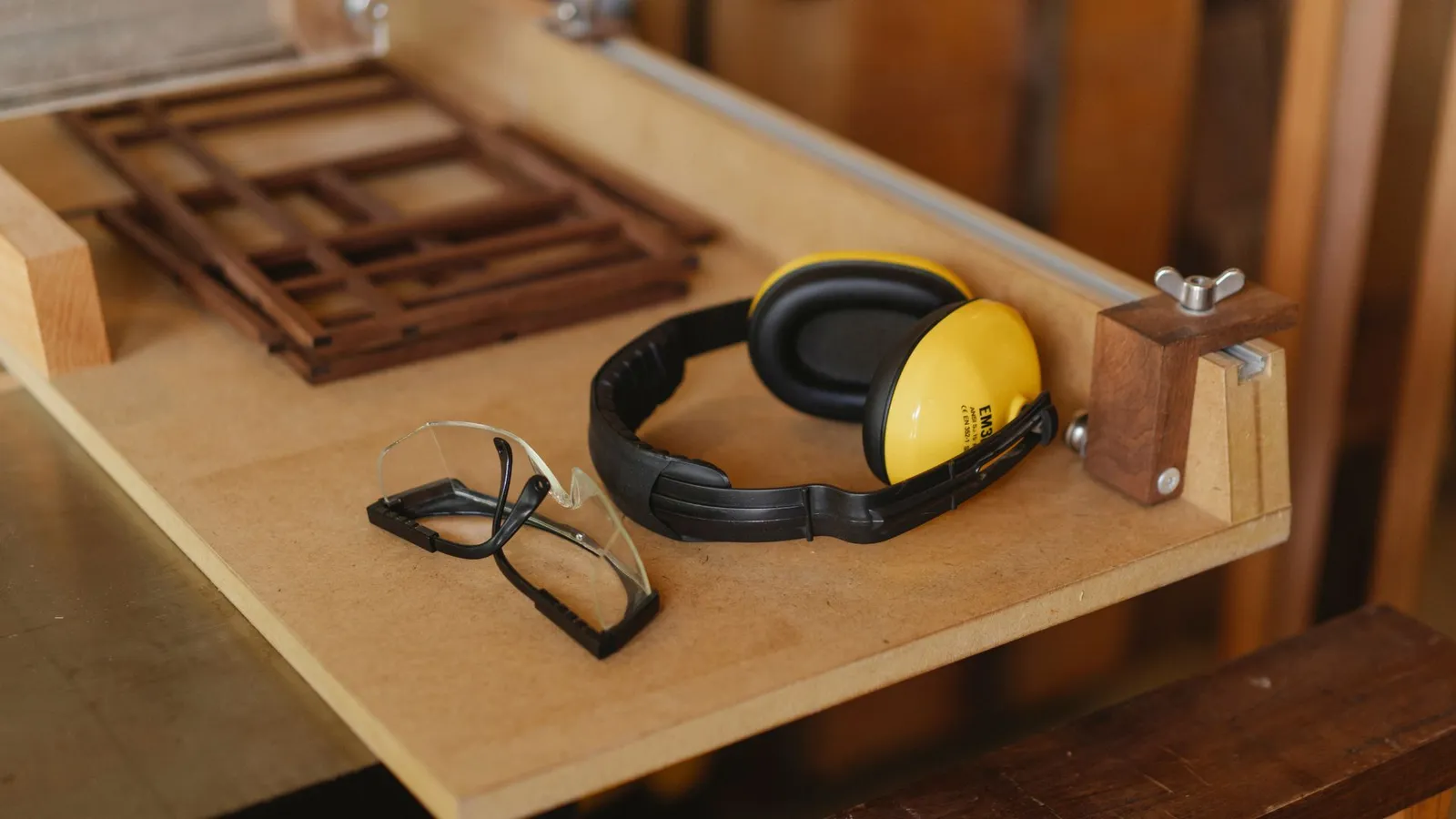
Noise at work is easy to underestimate, especially when, after a few weeks, you stop noticing the sound of operating machinery, grinders, or metal impacts. However, your hearing does not “get used to” noise in a safe way. Prolonged exposure can lead to irreversible hearing damage, and the risk affects many people working in the Netherlands in construction, industry, manufacturing, logistics, and maintenance.
Find out at what noise levels hearing protection is required, what responsibilities employers have, and why earplugs alone do not solve the problem.
Workplace Noise - When Does It Become Dangerous?
Occupational noise is usually associated with extremely loud equipment. In practice, however, lower noise levels can also pose a risk if you are exposed to them for a significant part of your shift. The risk of hearing damage therefore depends on both the sound level and the duration of exposure.
The problem is particularly common in workplaces where power tools, production machinery, pneumatic equipment, compressors, saws, hammers, metalworking machinery, or heavy equipment are used. Another specific hazard is impulse noise, meaning very short, sudden bursts of high-intensity sound.
Workers particularly exposed to occupational noise include:
- Structural and mechanical fitters
- Production machine operators
- Welders and metalworkers
- Construction and road workers
- Heavy equipment operators
- Mechanics and maintenance technicians
- Carpenters and woodworking machine operators
- Workers in industrial and petrochemical facilities
- Workers using grinders, hammers, and other power tools
However, the level of risk cannot be determined solely by job title. Two people performing similar work may have completely different levels of exposure depending on the equipment used, distance from the noise source, duration of the task, and conditions at the workplace.
80, 85 and 87 dB at Work - When Is Hearing Protection Required?
In the Netherlands, workplace noise requirements are based on occupational health and safety regulations and European rules concerning workers’ exposure to noise. The three key values are 80, 85 and 87 dB(A). However, they do not mean the same thing.
At a daily noise exposure level of 80 dB(A), the employer must make suitable hearing protection available to employees. Workers should also receive information about the risks and safe working procedures.
At 85 dB(A), the requirements become stricter. Hearing protection must be worn. The employer should also implement technical or organisational measures to reduce exposure to noise.
The exposure limit value is 87 dB(A). When assessing this value, the attenuation provided by correctly worn hearing protection is taken into account. Workers must not be exposed above this limit value.
In practice, you can remember it as follows:
- From 80 dB(A) - the employer must provide hearing protection
- From 85 dB(A) - hearing protection must be worn
- 87 dB(A) - the exposure limit value that must not be exceeded after taking hearing protection into account
These values refer to exposure normalised to an eight-hour working day. Therefore, a single reading from a sound level meter positioned next to a machine does not provide a complete picture of an individual worker’s actual exposure.
Noise and Working Time - How Long Can You Be Exposed to High Noise Levels?
Sound levels expressed in decibels are measured on a logarithmic scale. An increase of a few decibels therefore does not represent a small, proportional change. When assessing occupational noise exposure, an increase of 3 dB means a doubling of sound energy.
This is why the amount of time spent in a noisy environment directly affects safety. Working an entire shift at a particular noise level is not the same as performing a single loud task for a few minutes.
However, this does not mean that short tasks can be ignored. Pneumatic hammers, metal cutting, impacts between steel components, and other sources of intense or impulse noise can significantly contribute to total exposure. A risk assessment should take the entire working day into account, rather than focusing only on the task performed for the longest period.
How Can You Recognise Excessive Workplace Noise?
You may notice warning signs, but they are not a substitute for professional noise measurements. If you have to raise your voice significantly to speak to someone standing nearby, the noise level should get your attention. The same applies if your hearing feels muffled after your shift or you experience ringing or buzzing in your ears.
These symptoms are not a measurement method. You cannot use them to determine that a workplace noise level is exactly 80 or 85 dB. Actual exposure must be established through appropriate measurements and a workplace risk assessment.
In the Netherlands, the employer is responsible for assessing workplace hazards. Noise should be included in the occupational risk assessment and, where necessary, the level of exposure should be measured.
Workplace Noise in the Netherlands - Which Jobs and Industries Are Most Exposed?
Hearing protection is part of everyday PPE in many industrial facilities. In petrochemical plants, shipyards, metalworking facilities, construction sites, and production halls, you may encounter designated areas where hearing protection is mandatory.
On construction sites, noise may be generated by demolition hammers, cutting machines, grinders, compactors, saws, and heavy equipment. In industrial environments, additional sources include production lines, compressors, pumps, fans, and material-processing machinery.
In workshops and metalworking facilities, grinding, cutting, and impacts between steel components can be particularly noisy. The risk is usually lower in warehouses, although specific areas or equipment may still generate high noise levels.
If you see a mandatory hearing protection sign at the entrance to an area, it does not matter whether you personally consider the environment to be “very loud.” The safety rules established for that area must be followed.
How Does Noise Damage Your Hearing?
The inner ear contains delicate sensory cells responsible for detecting sound. Excessive noise can damage these cells, and the resulting hearing damage may be permanent.
At first, the symptoms can be easy to ignore. After work, your ears may feel blocked or muffled, you may hear ringing, or you may find yourself increasing the volume on your television or phone. Over time, you may experience difficulty understanding speech, particularly when there is background noise.
Tinnitus can also be associated with excessive noise exposure. Symptoms may include ringing, buzzing, whistling, or other sounds that are perceived despite the absence of an external sound source.
Do not wait until the problem begins to interfere with your everyday life. If you regularly notice reduced hearing, tinnitus, or other concerning symptoms after work, you should report the issue and consult an appropriate healthcare professional.
Earplugs or Earmuffs - How Should You Choose Hearing Protection?
Hearing protectors must be selected according to the actual hazard. The most common types are earplugs, which are inserted into the ear canal, and earmuffs, which cover the entire ear. Individually fitted hearing protection is also available.
The highest possible attenuation does not always mean the best protection for a particular job. Overprotection can make communication more difficult, reduce your ability to hear warning signals, and affect situational awareness. Hearing protection should reduce exposure to a safe level while still allowing the worker to perform their duties safely.
Correct use is equally important. An incorrectly fitted earplug may provide significantly less attenuation than indicated by the product specifications. Earmuffs can also lose effectiveness if the ear cushions do not seal properly against the head or if they interfere with other personal protective equipment.
Hearing protection should therefore be selected according to the specific workstation, noise exposure level, and other PPE being worn.
Hearing Protection Is Not Enough - How Can Workplace Noise Be Reduced?
A common mistake is assuming that the noise problem has been solved as soon as employees are given earplugs. Occupational health and safety principles require hazards to be controlled as close to the source as reasonably possible.
Where possible, the employer should first reduce the noise itself. This may involve selecting quieter machinery, carrying out proper equipment maintenance, installing acoustic enclosures or barriers, isolating the noise source, or changing the way work is organised.
Only where the risk cannot be sufficiently reduced through these measures does personal hearing protection become particularly important.
This principle is also important for workers to understand. If you spend eight hours working next to very loud equipment, do not automatically assume that earplugs solve the entire problem. Working conditions should be assessed and exposure should be systematically controlled.
Workplace Noise - What Are the Employer’s Responsibilities in the Netherlands?
The employer should assess the risks associated with occupational noise and, where necessary, carry out appropriate noise measurements. Based on the results, suitable control measures should be implemented.
Depending on the level of exposure, these measures may include:
- Reducing noise at source wherever possible
- Organising workstations and working time appropriately
- Providing suitable hearing protection
- Marking areas where hearing protection is mandatory
- Informing employees about noise-related risks
- Providing instructions on the correct use of hearing protectors
Where the level of risk requires it, employees should also have access to hearing surveillance or hearing checks in accordance with occupational health requirements for workers exposed to noise.
What Can You Do to Protect Your Hearing Throughout Your Shift?
Consistency is essential. If hearing protection is mandatory in a particular area, wear it for the entire time you are in that area. Removing your earmuffs “just for a moment” while machinery is operating increases your exposure.
Pay attention to the condition of your hearing protectors. Worn earplugs, damaged earmuff cushions, or equipment that does not fit properly with your safety helmet may not provide the expected level of protection.
Do not ignore changes in the workplace either. A new machine, different tool, additional production line, or relocated workstation can change the noise level. A risk assessment performed under previous conditions may no longer accurately reflect the current situation.
If you are unsure whether hearing protection is required in a particular area, ask your supervisor or the person responsible for health and safety. When it comes to noise, decisions should be based on measurements and site safety rules rather than personal perception.

How Does Noise Affect Workplace Safety?
Hearing damage is the most serious long-term consequence of excessive noise exposure, but noise can also create immediate safety risks during a shift.
In a noisy environment, it becomes more difficult to hear a colleague’s warning, an alarm, the reversing warning signal of a vehicle, or an unusual sound coming from operating machinery. Communication within the team becomes more difficult, and a misunderstanding when working with heavy equipment, loads, or industrial installations can lead to a dangerous situation.
Noise control is therefore not only about asking, “Will I still be able to hear properly in a few years?” It is also an important part of everyday workplace safety.
VCA and Hearing Protection - Prepare for Safe Work in the Netherlands
Noise is invisible, and its effects may develop gradually. That is precisely why it is so easy to underestimate. If you work in the Netherlands in construction, manufacturing, industry, petrochemicals, or around machinery, understanding the 80, 85 and 87 dB(A) thresholds and the correct use of hearing protection should be part of your basic safety knowledge.
Hearing protection is also part of the broader occupational health and safety knowledge required on many Dutch construction sites and industrial facilities. If you want to prepare yourself for working safely in this type of environment, check out VCA training courses at Bonapi. During the training, you will learn how to identify hazards, assess risks, and correctly use personal protective equipment (PPE).
Additional qualifications can improve your opportunities in the Dutch labour market, but equally important is the knowledge that helps you return home safely after every shift. Follow Bonapi on social media or subscribe to the newsletter to receive information about training courses and practical advice on working safely in the Netherlands.