User Panel
Work in the Netherlands
Search

Szymon
Експерт з ІТ / Автоматизація процесів
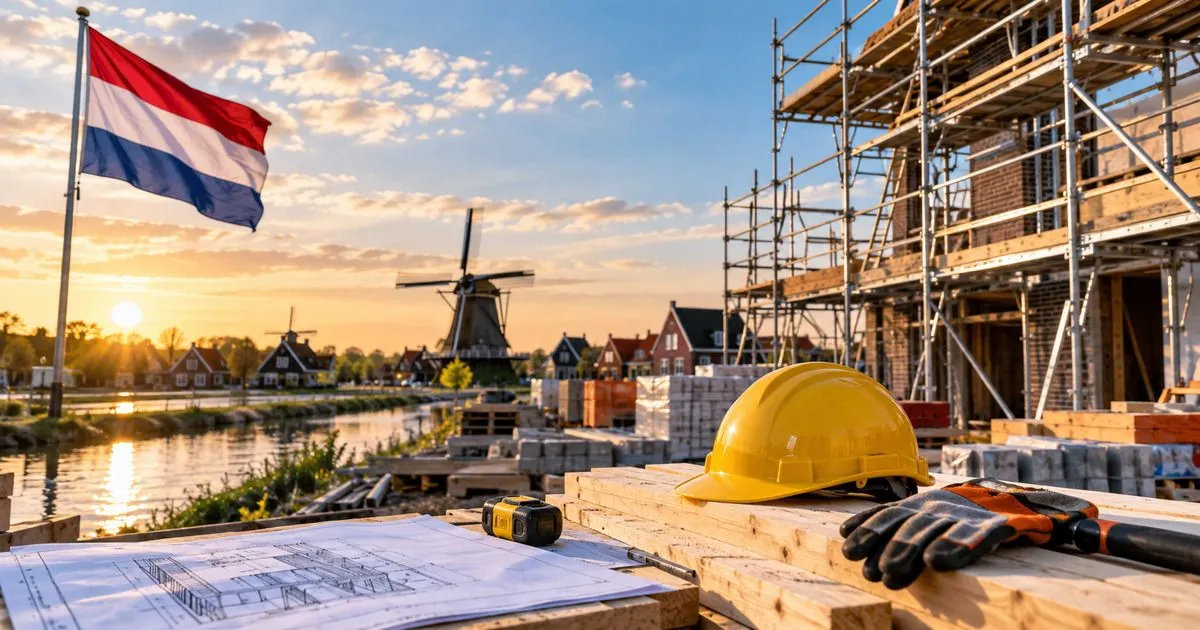
Are you coming to the Netherlands for work for a few weeks, six months, or are you still unsure how long you will stay? The way you register in the Dutch Personal Records Database depends on the intended duration of your stay. The two abbreviations you will encounter most often are RNI and BRP. We explain the difference between them, when you need to register as a resident of the Netherlands, and what to do if a stay that was initially intended to be short turns into a longer one.
BRP (Basisregistratie Personen) is the Dutch Personal Records Database. It contains personal data on both people who live in the Netherlands and those registered as non-residents.
RNI (Registratie Niet-Ingezetenen) is the section of the BRP intended for non-residents. The term “RNI registration” is generally used in reference to people who live outside the Netherlands or come to the Netherlands for a short period and need a BSN.
The key difference can therefore be summarised as follows:
RNI – registration as a non-resident, suitable, among other situations, for stays in the Netherlands of less than 4 months;
BRP as a resident – registration with the municipality for someone who intends to live in the Netherlands for more than 4 months.
These are therefore not two completely separate systems. The RNI is part of the BRP. From the perspective of someone coming to the Netherlands for work, however, the most important question is whether they should be registered as a non-resident or as a resident.
If you live outside the Netherlands or plan to stay in the Netherlands for less than 4 months, you can register as a non-resident in the RNI. This may apply, for example, if you come to the Netherlands for a contract lasting a few months, seasonal work, or a short-term assignment.
Registration takes place in person at one of the 19 RNI registration desks located in designated Dutch municipalities. You do not have to use the registration desk closest to your workplace. Before your visit, check the requirements of your chosen municipality and make an appointment if required.
When registering in the RNI, you provide personal details and your residential address outside the Netherlands, among other information. You will also need a valid identity document. If additional documents are required, for example documents relating to a child, the authorities may request the relevant certificates, and foreign documents may need to be translated or legalised.
After registration, you will receive a BSN if you have not previously been issued one.
A BSN (burgerservicenummer) is a personal identification number used when dealing with Dutch government authorities. It is required for matters including taxation and communication with public institutions.
Among people coming to the Netherlands for work, you will often hear the expression “getting a BSN.” In practice, you receive the number as part of the registration of your personal details. For a short stay, this may be registration in the RNI, while for a longer stay it will normally involve registration as a resident with your municipality.
Having a BSN does not therefore mean that you are registered as a resident of the Netherlands. Someone registered in the RNI can also have a BSN.
Importantly, you do not need to obtain a new BSN every time you return to the Netherlands. Once a BSN has been assigned to you, it remains yours. If your status changes from non-resident to resident, you do not receive a new BSN – your details in the BRP are updated instead.
If you come to the Netherlands intending to live here for more than 4 months, you should register as a resident with the municipality where you live.
Dutch regulations require you to complete this registration within 5 days of arriving in the Netherlands. If your spouse, partner, or children move with you and will also be living in the Netherlands for more than 4 months, they must be registered as well.
Unlike RNI registration, you cannot choose any registration desk in the country. You register with the gemeente, or municipality, responsible for the address where you actually live.
Once registered, your details are entered in the BRP as a resident. If you already have a BSN from a previous stay or RNI registration, you keep the same number.
The difference is easiest to understand through practical examples.
Example 1: You come to the Netherlands for 10 weeks of seasonal work. Once your contract ends, you return to your country of residence. In this situation, RNI registration corresponds to the temporary nature of your stay.
Example 2: You move to the Netherlands and sign a one-year employment contract. From the outset, you know that you will be living here for more than 4 months. You should register as a resident with the municipality responsible for your place of residence.
Example 3: You come to the Netherlands on a three-month contract and register in the RNI. After two months, you receive another job offer and decide to stay in the Netherlands for longer. You do not apply for a second BSN. However, you should register as a resident with the municipality where you live because the circumstances of your stay have changed.
Example 4: You live in Germany or Belgium but commute to work in the Netherlands. This does not automatically make you a resident of a Dutch municipality. The RNI is also used to register people who live outside the Netherlands but need to interact with Dutch government authorities.
This is a common situation among migrant workers. You may come to the Netherlands for a few months but then receive a contract extension, change employers, or simply decide to stay.
This does not mean that you can remain registered indefinitely as a non-resident simply because that was your situation when you first registered. If it becomes clear that you will be living in the Netherlands for more than 4 months, you should contact the municipality responsible for your place of residence and register as a resident. If you were already entered in the BRP as a non-resident, your details will be updated accordingly.
It is worth dealing with this as soon as your plans change. Having accurate information in the BRP is important when dealing with Dutch government authorities and other institutions.
The exact list of documents may vary depending on the municipality and your personal circumstances, so you should always check the requirements of your specific gemeente before your appointment. A valid identity document is essential.
The municipality may also require documents relating to your residential address and civil status, such as a birth certificate or marriage certificate. Additional requirements concerning the format, legalisation, or translation of documents issued outside the Netherlands may also apply.
For this reason, you should not rely solely on a list of documents given to you by someone who registered in a different municipality. Before making an appointment, check the current requirements of the municipality responsible for your address.
Poland is a member of the European Union. A Polish citizen does not need a Dutch residence permit simply because they intend to stay in the Netherlands for more than 3 months. EU citizens can reside in the Netherlands under the rules arising from EU law, while a valid passport or national identity card is used to confirm their identity and nationality.
However, the right of residence should not be confused with the obligation to register in the BRP. If, as a Polish citizen, you intend to live in the Netherlands for more than 4 months, you still need to register as a resident with your municipality.
Different rules may apply to workers from outside the EU, EEA, and Switzerland. In their case, residence and work rights may require additional documentation. RNI registration or having a BSN does not replace a residence or work permit where such a permit is required.
When registering as a resident in the BRP, the address where you actually live is important. For employees staying in accommodation provided by an employer or employment agency, the situation can be more complex. It is therefore advisable to establish in advance whether registration at the accommodation address is possible and under what conditions.
Do not assume that every type of employee accommodation automatically allows you to register at that address. If you are planning to stay for more than 4 months, check this with the property owner, employer or employment agency, as well as with the relevant municipality.
This is particularly important if you initially come to the Netherlands on a short-term contract but are considering staying longer. Your accommodation arrangements and the possibility of registering correctly at your address may then become particularly important.
No. RNI or BRP registration and health insurance are separate matters. Being entered in the register does not automatically provide you with an insurance policy.
If you come to live or work in the Netherlands and become subject to the Dutch health insurance requirement, you need to arrange health insurance separately. Dutch authorities state that anyone subject to this requirement should take out Dutch health insurance as soon as possible, and no later than 4 months after arrival. Coverage should apply from the date on which the insurance obligation began.
If you are registered as a resident and move away from the Netherlands, you may also be required to report your departure.
Under Dutch rules, you must deregister as a BRP resident if you will be living outside the Netherlands for more than 8 months within a one-year period. These 8 months do not have to form one continuous period. The requirement may also apply if you keep a home in the Netherlands.
After deregistration, your resident data is transferred to the non-resident section of the BRP, the RNI. Your BSN remains the same.
Before coming to the Netherlands, the main question you should ask yourself is: How long do I intend to live in the Netherlands?
If you are coming for a short stay of less than 4 months and need a BSN for work and for dealing with Dutch institutions, registration as a non-resident in the RNI may be appropriate.
If you plan from the outset to live in the Netherlands for more than 4 months, you should register as a resident with the municipality where you live. In this case, the registration deadline is 5 days after arrival.
If your plans change after you have already started working, you do not need to obtain a new BSN. However, you do need to make sure your status and personal details are updated by registering as a resident with the appropriate municipality.
Understanding these rules helps avoid one of the most common misunderstandings: “I have a BSN, so all the formalities have been taken care of.” A BSN is an important personal identification number, but it does not replace the correct type of registration based on where and how long you actually live.
Administrative formalities are only the first step in preparing for work in the Netherlands. In many industries, appropriate qualifications, knowledge of safety procedures, and job-specific training are equally important.
If you employ a group of workers or are preparing a team to start work, check out the employee training courses offered by Bonapi. We can provide training for individual employees as well as entire groups, tailoring the training to the type of work performed and the needs of your team.
Follow Bonapi on social media or subscribe to the newsletter to receive information about training courses and practical resources related to working in the Netherlands.