User Panel

Work in the Netherlands
Search

Nicole
Dyrektorka działu finansów i administracji
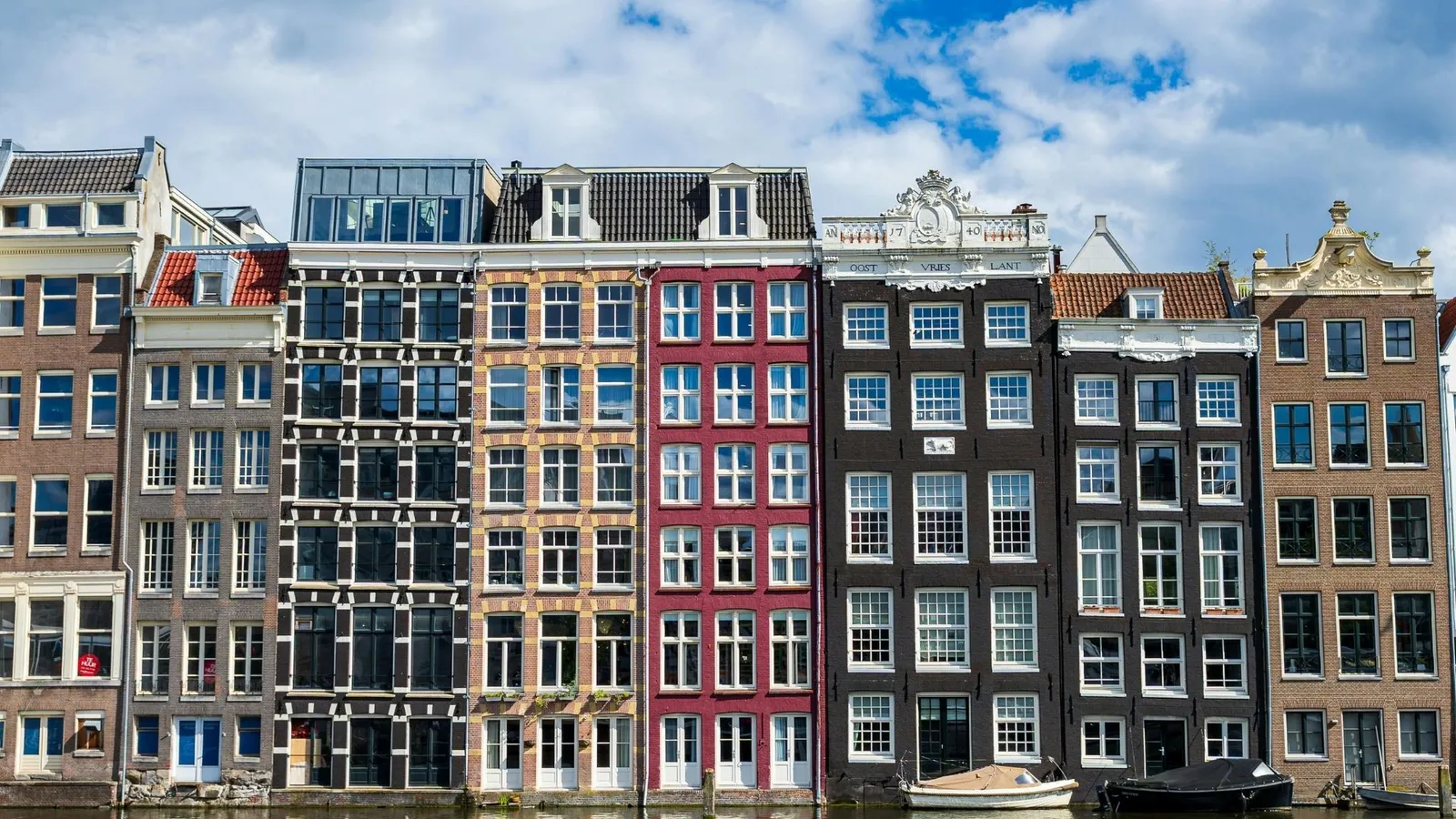
Going to work in the Netherlands through an employment agency often means that accommodation is provided along with your job. This can be a convenient solution when you are just starting out, especially if it is your first time in the Netherlands and you do not have accommodation of your own. However, the standard of agency-provided housing can vary considerably, and accommodation costs directly affect how much of your wages you actually take home. That is why, before leaving, it is worth understanding what the SNF standard is, what you can expect from your room, and which warning signs should raise concerns.
There is no single type of “agency accommodation.” Employment agencies and the companies they work with may house employees in regular houses and apartments, worker accommodation facilities, guesthouses, holiday parks, or purpose-built complexes for temporary workers.
Conditions can therefore vary significantly. In one location, you may live in a shared house with several other people but have your own room. Elsewhere, you may share a bedroom with another person, with a communal kitchen and bathroom used by a larger group of residents.
Before signing an agreement, you should at least ask about:
Do not assume that “accommodation provided by the agency” means a free room. In most cases, accommodation is a paid service, and you should clearly understand how the charges are calculated and collected.
For many candidates, the most important question is: Will I get my own room? There is no general rule requiring every agency worker in the Netherlands to be provided with a single room.
Under the current SNF standards, a bedroom may generally be occupied by no more than two people. As of 1 January 2025, rooms intended for more than two occupants are no longer permitted under the SNF standard. Bunk beds were already removed from the standard as of 1 January 2024.
SNF is gradually tightening its privacy requirements. More stringent rules concerning single-occupancy rooms already apply to certain new accommodation facilities. From 1 October 2026, additional requirements are due to be extended to new locations and locations operated by companies newly entering the SNF system.
If having your own room is a condition of accepting the job, obtain confirmation before you arrive. Statements such as “good accommodation” or “rooms for a maximum of two people” are not enough. Ask specifically whether your room will be for single occupancy.
SNF (Stichting Normering Flexwonen) operates a standards system for accommodation provided to migrant workers. A company listed in the SNF register must comply with specific requirements, and the accommodation locations it registers are subject to inspections.
The SNF standard covers areas including:
These are much more specific requirements than simply providing a bed and a roof over someone’s head.
Under the SNF standard applicable in 2026, regular residential buildings and residential accommodation units must generally provide at least 12 m² of usable floor area per resident. For accommodation or recreational facilities, the basic minimum is 10 m² per person, although higher requirements already apply to certain categories and new facilities.
The sleeping area itself must provide at least 3.5 m² per resident. Each person should have their own bed with a mattress measuring at least 80 × 200 cm, as well as a chair.
The standard also specifies access to sanitary facilities: at least one toilet and one shower per eight people. Requirements also cover food preparation and food storage facilities. Each resident should have access to 30 litres of refrigerated and freezer storage capacity.
SNF certification therefore does not mean luxury accommodation. It means that the accommodation meets a defined minimum standard that can be verified and is subject to inspection.
SNF maintains a public register of certified companies. If an agency claims that its accommodation complies with SNF standards, you can check whether the company is actually listed in the register.
This is a good habit to develop before travelling to the Netherlands. A logo displayed on a website or in a job advertisement should not be your only proof.
Certified companies are subject to inspections. SNF provides for an annual administrative audit, while accommodation locations are periodically inspected for compliance with the applicable requirements. Serious non-compliance may result in suspension and, if the problems are not resolved, removal of the company from the register.
At the same time, certification does not mean that nothing can ever go wrong during your stay or that conflicts with property management cannot occur. If the standard of accommodation differs from what was promised, the problem should still be reported.
There is no single statutory weekly rate for agency-provided accommodation that applies to all workers in the Netherlands. The amount depends on factors such as the type of accommodation, the terms of the agreement, and the way the charges are calculated.
Instead of looking only at the hourly wage advertised in a job offer, ask for an example of a typical wage calculation. Check how much the accommodation costs per week or per month and exactly what is included in that amount.
The rules governing deductions from wages are also important. If an employer deducts accommodation costs from the statutory minimum wage, specific conditions apply. The deduction for accommodation may amount to no more than 25% of the statutory gross minimum wage payable to the employee. The employee must also provide the employer with written authorisation for the deduction, and the accommodation must meet the required quality standards.
However, this does not mean that “every agency accommodation can cost no more than 25% of your wages.” The limit applies to a specific mechanism for making deductions from the statutory minimum wage; it does not establish a single maximum price for all worker accommodation in the Netherlands.
You should therefore check your payslip (loonstrook) and review your wages and accommodation-related deductions separately. If you do not understand a deduction, ask for an explanation of exactly how the amount was calculated.
This is one of the most important changes affecting migrant workers in the Netherlands. Since the introduction of the Wet goed verhuurderschap (Good Landlordship Act), for new agreements entered into from 1 July 2023, a migrant worker’s tenancy agreement should be separate from their employment contract.
The purpose is to reduce situations in which losing your job automatically means losing your accommodation.
Therefore, if you come to the Netherlands as a worker from another EU country and accommodation is provided in connection with your employment, pay close attention to the documents you receive. Employment conditions and accommodation terms should not be hidden together in one unclear document.
The landlord is also required to provide migrant workers with information about their rights and obligations relating to the accommodation in a language they understand. However, the tenancy agreement itself does not necessarily have to be written in Polish.
This is a question worth asking before you leave. For years, one of the biggest problems with migrant worker accommodation was the very close link between employment and housing: the job ended, and the worker was expected to move out almost immediately.
The requirement to separate the tenancy agreement from the employment contract is intended to reduce this dependency. You should therefore not automatically assume that losing your job means you must leave your room on the same day.
At the same time, this does not give you the right to remain in agency accommodation indefinitely. The type of tenancy agreement you have signed and its terms are important. Read the provisions concerning termination of the accommodation agreement before signing any documents.
Be particularly cautious about statements such as: “If you don’t go to work tomorrow, you won’t have anywhere to sleep tomorrow night.” The conditions for terminating a tenancy should be based on the agreement and applicable legislation, not on a verbal threat from a coordinator.
Accommodation problems can often be anticipated before you even leave. One of the biggest red flags is a lack of specific answers. If a company refuses to tell you where you will be staying, how many people will share your room, or exactly how much you will pay, proceed with caution.
Other warning signs include:
Take photographs of serious defects and keep copies of messages relating to any issues you report. If further action becomes necessary, this documentation may be very important.

First, report the problem in writing to the person responsible for the accommodation. An email or message sent through a messaging app creates a record that can later show when the issue was reported and what exactly you reported.
If the landlord fails to respond or more serious violations occur, you can seek assistance outside the employment agency. Since 1 January 2024, every Dutch municipality (gemeente) has been required to provide a reporting point where tenants can report improper conduct by landlords. The municipality may take action under the Wet goed verhuurderschap.
For certain issues involving rent, service charges, or defects in the property, the Huurcommissie (Rent Tribunal) may also be able to assist. If the accommodation is advertised as being covered by SNF standards, you can also check the relevant SNF procedure for reporting problems concerning compliance with those standards.
Do not ignore situations that pose a risk to your health or safety. No heating in winter, severe mould, unsafe electrical installations, or blocked emergency exits are very different from an uncomfortable mattress or a disagreement with a housemate.
The best way to protect yourself is to gather information before getting into a car or bus to the Netherlands. Ask for photographs, the address—or at least the type of accommodation—and written accommodation terms.
Check the cost and ask whether the fee includes utilities, internet, and any other charges. Also establish how many people will share the room and what happens to your accommodation if you change jobs or your assignment ends.
Do not judge a job offer solely on the phrase “accommodation provided.” Two jobs offering exactly the same hourly rate can result in completely different financial and living situations. In one case, you may have good accommodation close to work; in another, you may be paying a high price for a shared room combined with a long commute.
Accommodation is part of your actual working and living conditions in the Netherlands, even if the tenancy agreement is formally separate from your employment contract. Checking it before you leave can save you considerably more trouble than comparing a difference of a few cents in hourly pay.
Safe accommodation is one part of preparing to work abroad. The other is having the right qualifications, which can give you access to a wider range of job opportunities and better positions instead of forcing you to accept the first offer available.
If you are planning to work in construction, logistics, industry, or the petrochemical sector, check out Bonapi’s training courses and choose qualifications relevant to your industry. Up-to-date certificates and practical skills can increase your opportunities on the Dutch labour market.
Follow Bonapi on social media or subscribe to the newsletter to receive information about training courses and practical resources on working and living in the Netherlands.